The Herald

Proteas turn dominance into emphatic win

Tourists falter for 295 after follow-on as Rabada and Jansen lead charge at St George’s Park

SummaryOpen the quick read
  • South Africa defeated Australia by an innings and 31 runs at St George's Park to level the Test series.
  • Captain Temba Bavuma anchored the recovery from 40/4 with a brilliant 179, supported by Marco Jansen's 85 and Simon Harmer's 82.
  • Australia were skittled for just 99 in their first innings as Jansen claimed a five-wicket haul to enforce the follow-on.
  • Travis Head struck a combative 121 in the second innings to stage a fightback alongside stubborn tail-end resistance.
  • Kagiso Rabada took four wickets and Wiaan Mulder took three as South Africa bowled out Australia for 295 to seal the win.
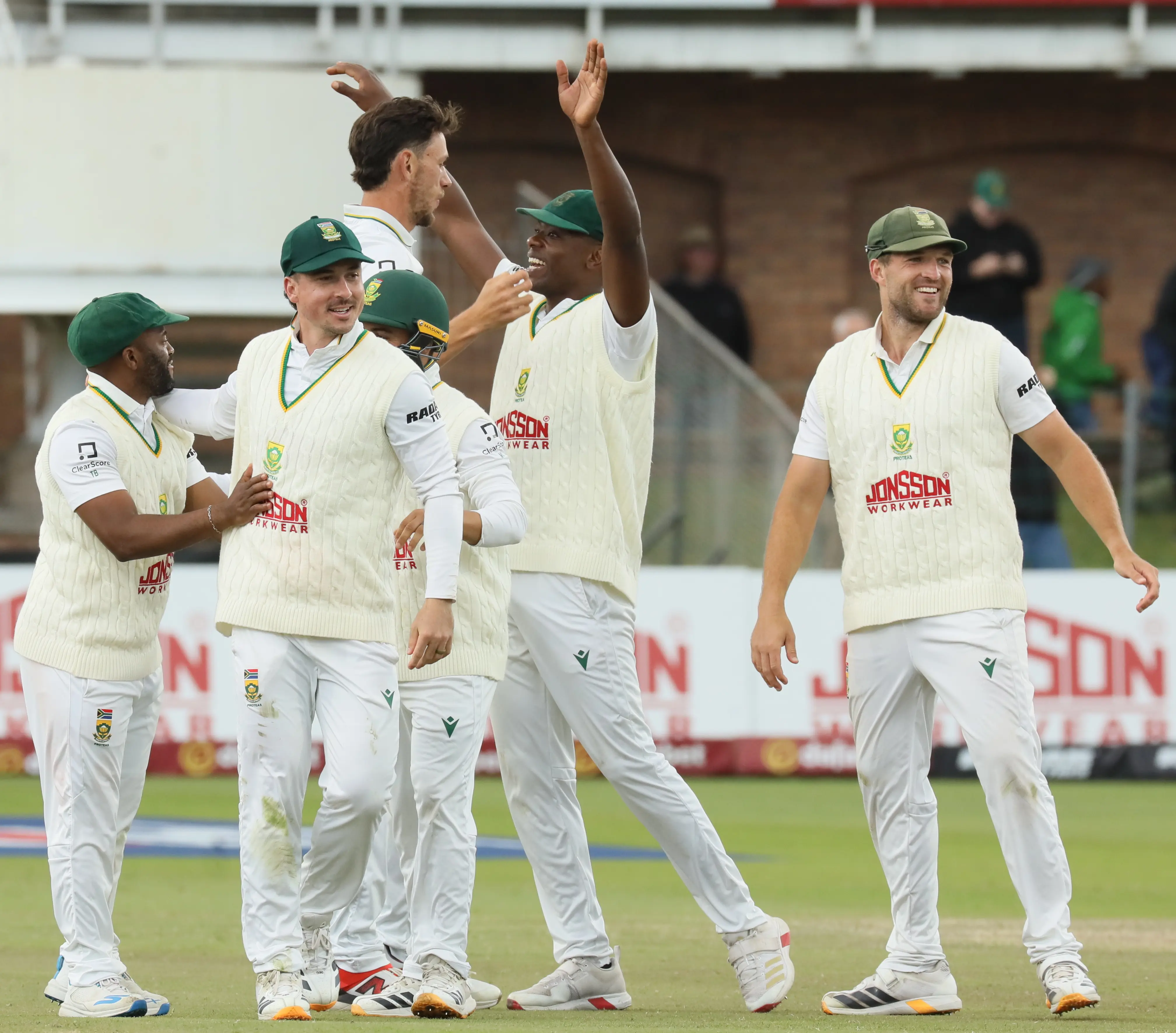
The Proteas celebrate taking the final wicket as they crushed Australia by an innings and 31 runs in the second Dafabet Test Match at St George's Park in Gqeberha on Thursday.
The Proteas celebrate taking the final wicket as they crushed Australia by an innings and 31 runs in the second Dafabet Test Match at St George's Park in Gqeberha on Thursday. Picture: FREDLIN ADRIAAN/THE HERALD

SA eventually turned a commanding position into an emphatic victory at St George’s Park, beating Australia by an innings and 31 runs to level the series after the visitors’ stubborn second-innings resistance finally ended at 295.

Australia had reached tea on 253/6, still 73 runs behind, but the Proteas needed only 15.1 more overs to finish the job.

Scott Boland fell for 40, Pat Cummins made four, Mitchell Starc 11 and Josh Hazlewood was dismissed without scoring as SA wrapped up the innings for 295, completing a victory that had always appeared on the cards after Australia’s first-innings collapse, but had not always looked quite so straightforward.

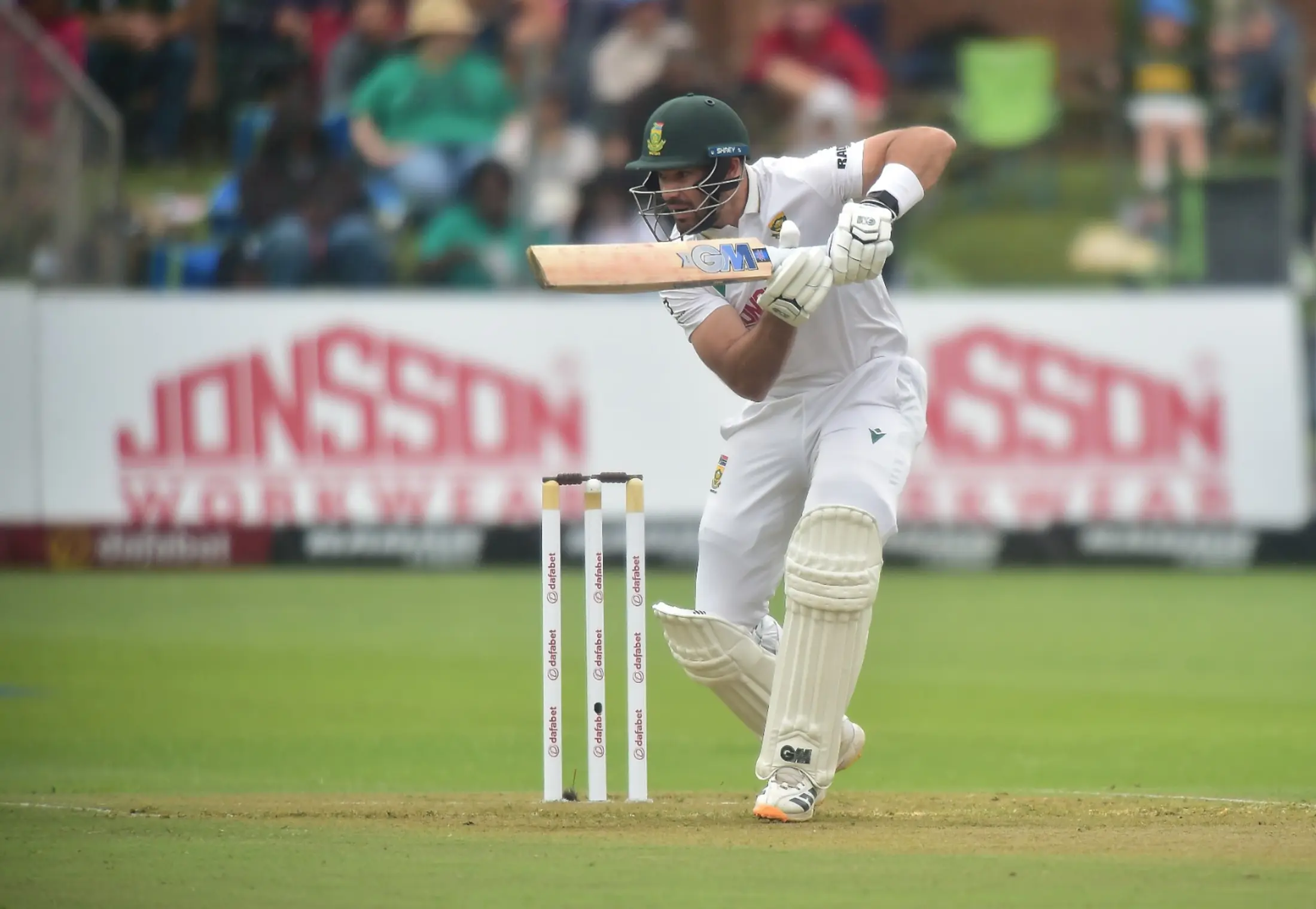
The match had begun awkwardly for the Proteas, with rain reducing the first day to only 12.2 overs and leaving them 20/2 after Boland removed Aiden Markram and Marques Ackerman.

Their early position became even more precarious when David Bedingham and Matthew Breetzke also departed cheaply, leaving SA 40/4.

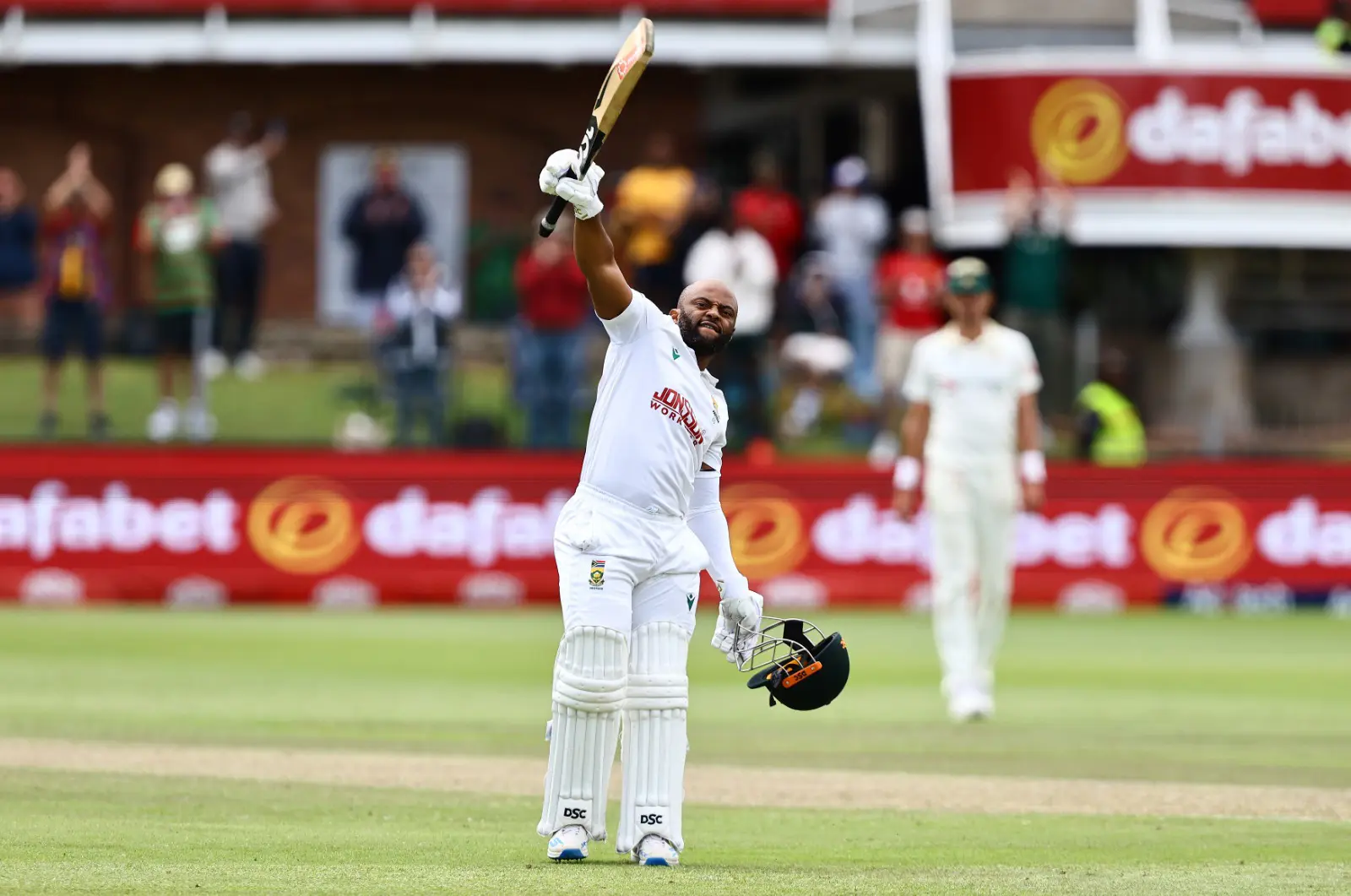
Temba Bavuma then changed the direction of the Test.

His 179 from 334 balls was the innings around which SA rebuilt, but the captain’s contribution became even more valuable because of the partnerships that followed.

Marco Jansen’s 85 from 100 balls injected momentum into the innings, while Simon Harmer’s career-best 82 from 157 balls showed patience to help take the total to 425/9 declared.

From 40/4, SA had produced enough batting depth to establish a 326-run lead.

Australia never recovered from what followed.

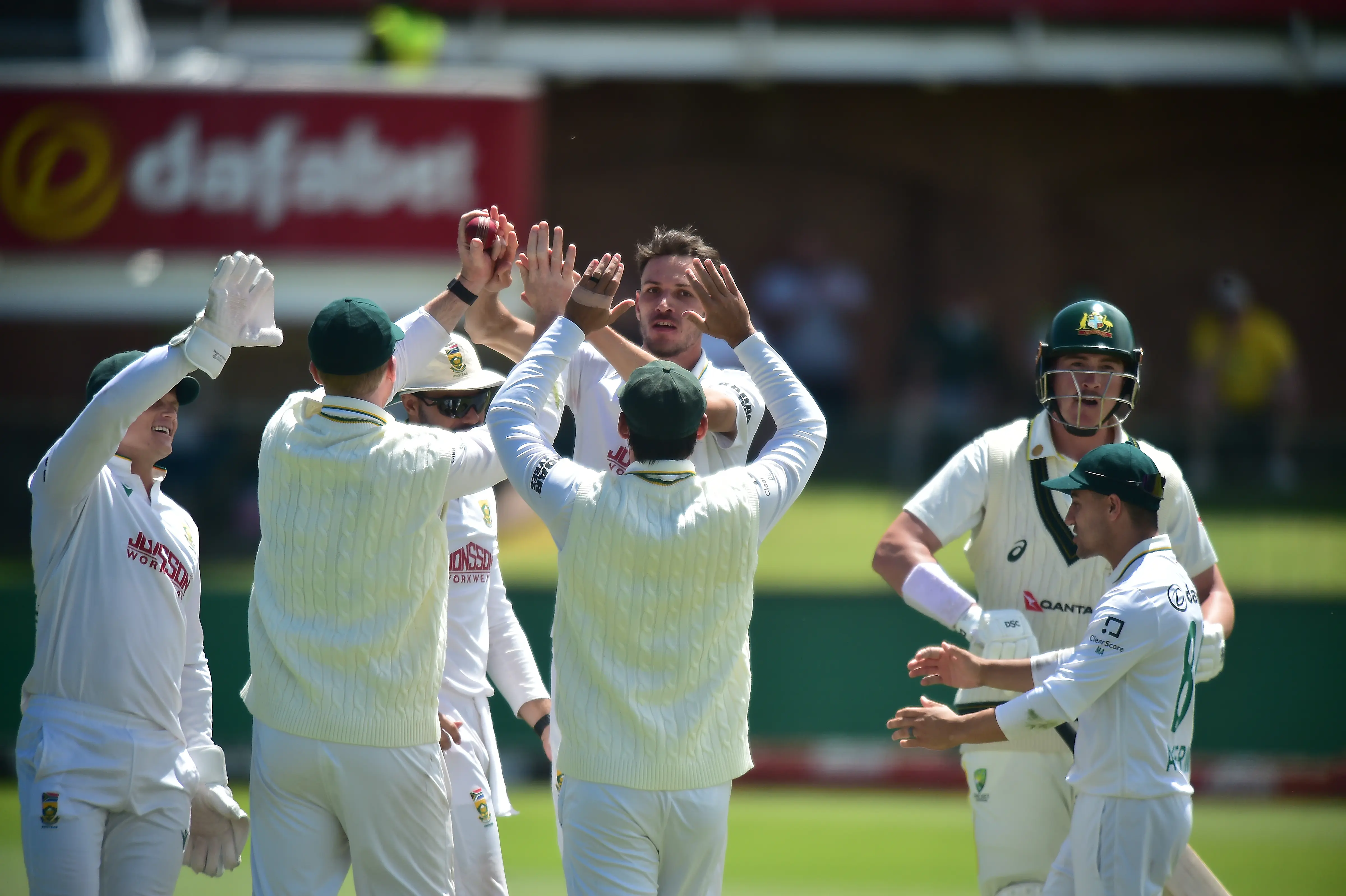
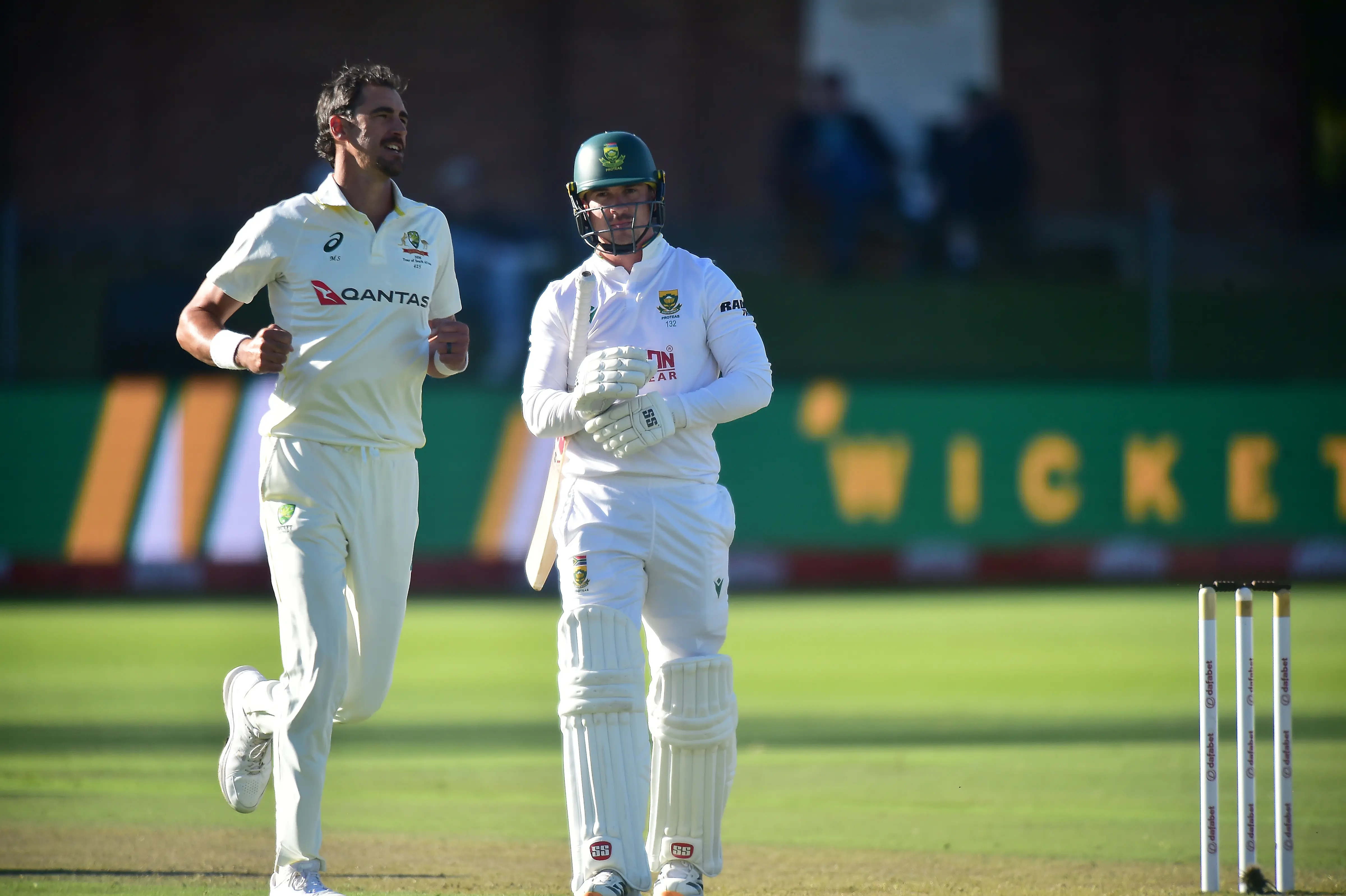
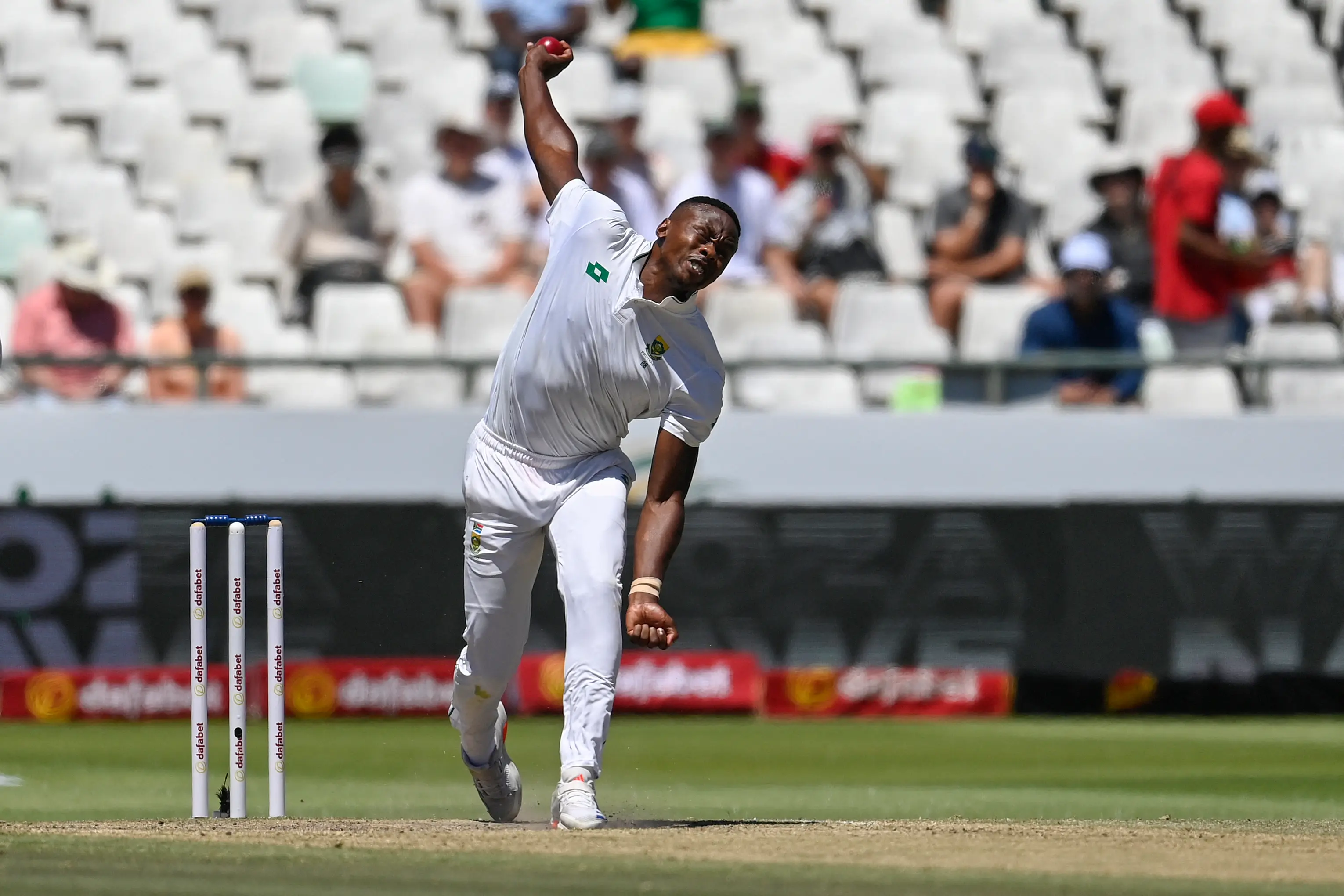
Their first innings lasted only 42.3 overs as they were bowled out for 99, with Jansen taking five wickets, Kagiso Rabada and Wiaan Mulder grabbing two each, while Anrich Nortje claimed one wicket before he left the field with a suspected groin injury not long after.

The collapse was comprehensive, and SA’s decision to enforce the follow-on appeared entirely logical.

Nic Maddinson fell for eight, but Travis Head refused to allow another collapse.

His 121 from 190 balls transformed the second innings, giving Australia aggression and belief, while also consuming valuable overs.

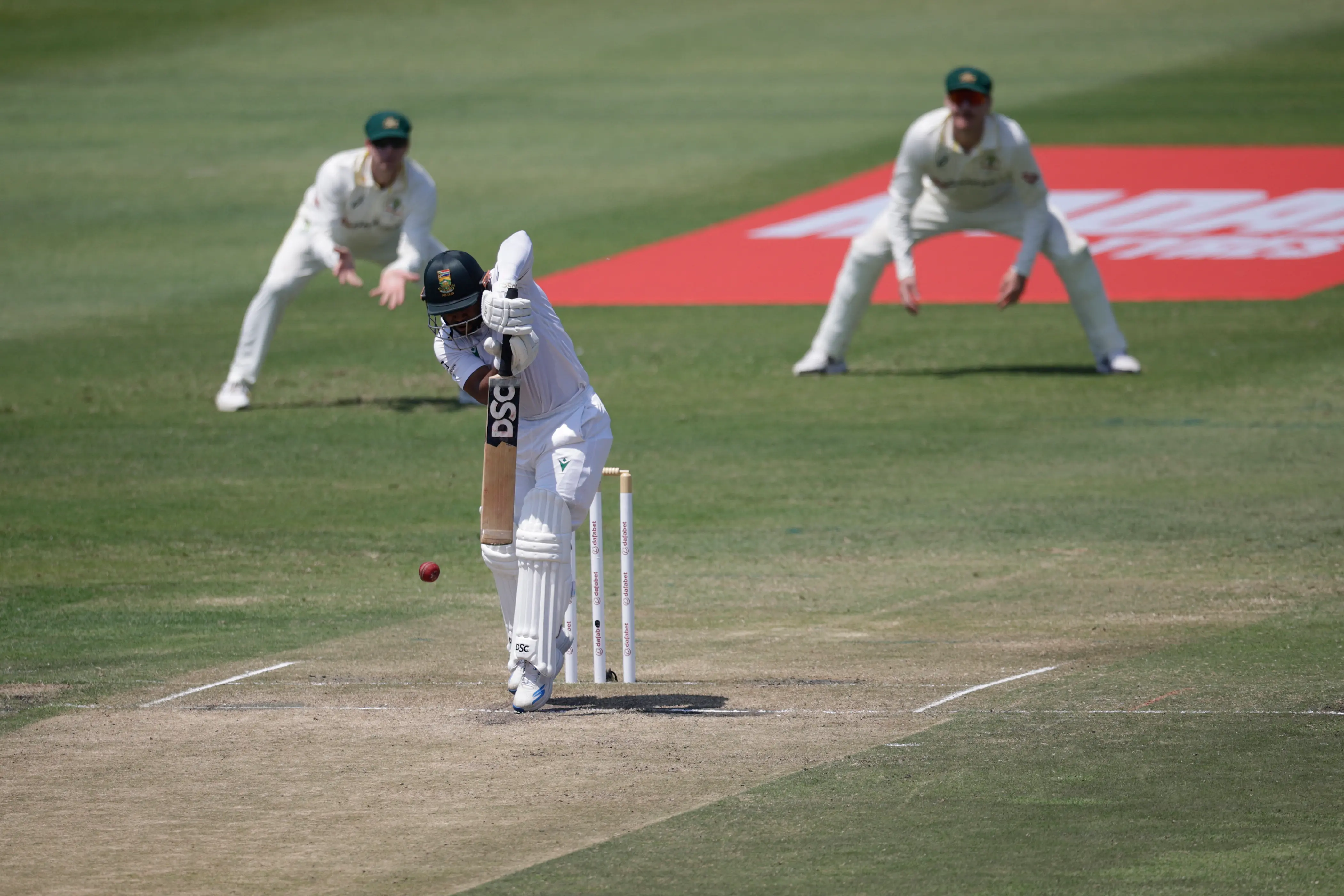
Marnus Labuschagne added 39 from 98 balls, while Matt Renshaw and Beau Webster offered resistance around Head.

By the time Head was dismissed for 121, Australia had reached 209/5 and had forced the hosts to work far harder than the first innings had suggested they would need to.

Boland’s 40 from 166 balls and Alex Carey’s unbeaten 37 represented a different kind of resistance.

They absorbed pressure rather than attacking it, and by tea Australia had dragged themselves to 253/6.


That resistance ultimately delayed rather than denied SA.

Rabada finished with four wickets in the second innings, while Mulder claimed three and Jansen one.

Harmer, who had bowled 39 overs, took two.

The workload was significant, but so too was the consistency.

SA had needed 107.1 overs to remove Australia in the second innings, a reminder that the victory was not simply handed to them after the 99 all out.

The Test had therefore been defined by contrasting periods of control.

That made the victory more significant than the final margin suggested.

SA had not merely dominated one passage of play. They had found different ways to win each time Australia threatened to shift the momentum.

Bavuma provided the foundation with the bat, Jansen contributed with both bat and ball, and Rabada, Mulder and Harmer eventually supplied the pressure needed to finish the job.

After the first Test defeat, SA had responded with a performance that was emphatic in result but demanding in execution.

The Herald

In Related News