

A coding project that began in the Bay has added another feather to its cap, having recently been recognised nationally for its academic and social impact.
Tangible was one of three national academic impact case studies presented at the Universities South Africa Higher Education Conference, after being selected as one of USAf’s top 2025 academic impact case studies.
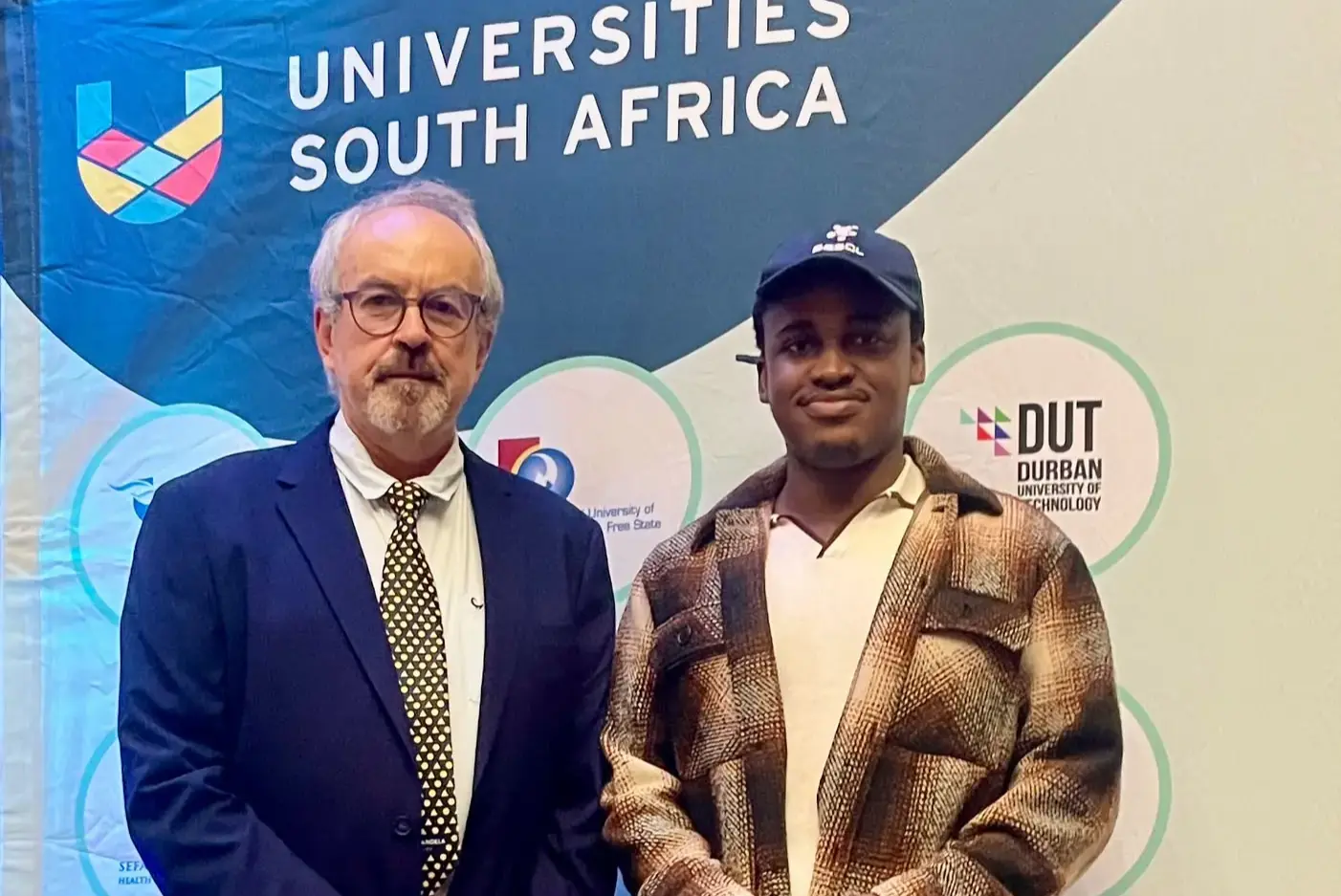
Professor Jean Greyling, head of computing sciences at Nelson Mandela University and founder of Tangible, presented the project in Pretoria on Friday.
And the proof of its success is best exhibited by a former pupil who joined Greyling at the event, namely Katlego Nyambi from Soshanguve, who first encountered Tangible in grade 11 at a workshop in Diepsloot.
“Towards the end of grade 11 I had no idea what I was going to do after school. I thought I did not have many options,” Katlego said at the time.
After the workshop, he joined the Tangible online C# coding club.
While still at school, he said: “Now I know I want to study computer science at a university and I want to become a software engineer.”
Today, Katlego is studying towards a BSc computer science at the University of Pretoria, supported by an Amazon bursary.
Tangible began in 2017 through an honours project by Byron Batteson, who explored whether pupils could be introduced to coding without needing computers, internet access or electricity.
That research became the foundation for a programme that now helps teachers introduce coding and computational thinking through hands-on activities.
Since then, the work around Tangible has resulted in five journal papers, 12 conference papers, eight PhD studies and seven master’s studies.
Global implementation is now led by the Gqeberha-based LEVA Foundation, with more than 300,000 pupils across five continents having been reached through Tangible’s coding activities and apps.