Entrepreneurship can no longer be treated as an optional pathway for young South Africans but must become a central part of the country’s economic future, with universities playing a critical role in turning young people into job creators.
This was the message of Nelson Mandela University (NMU) deputy vice-chancellor: for people and operations Luthando Jack, who told the third International Conference on Business Innovation and Incubation that entrepreneurship needed to become part of SA’s national mindset alongside education and formal qualifications.
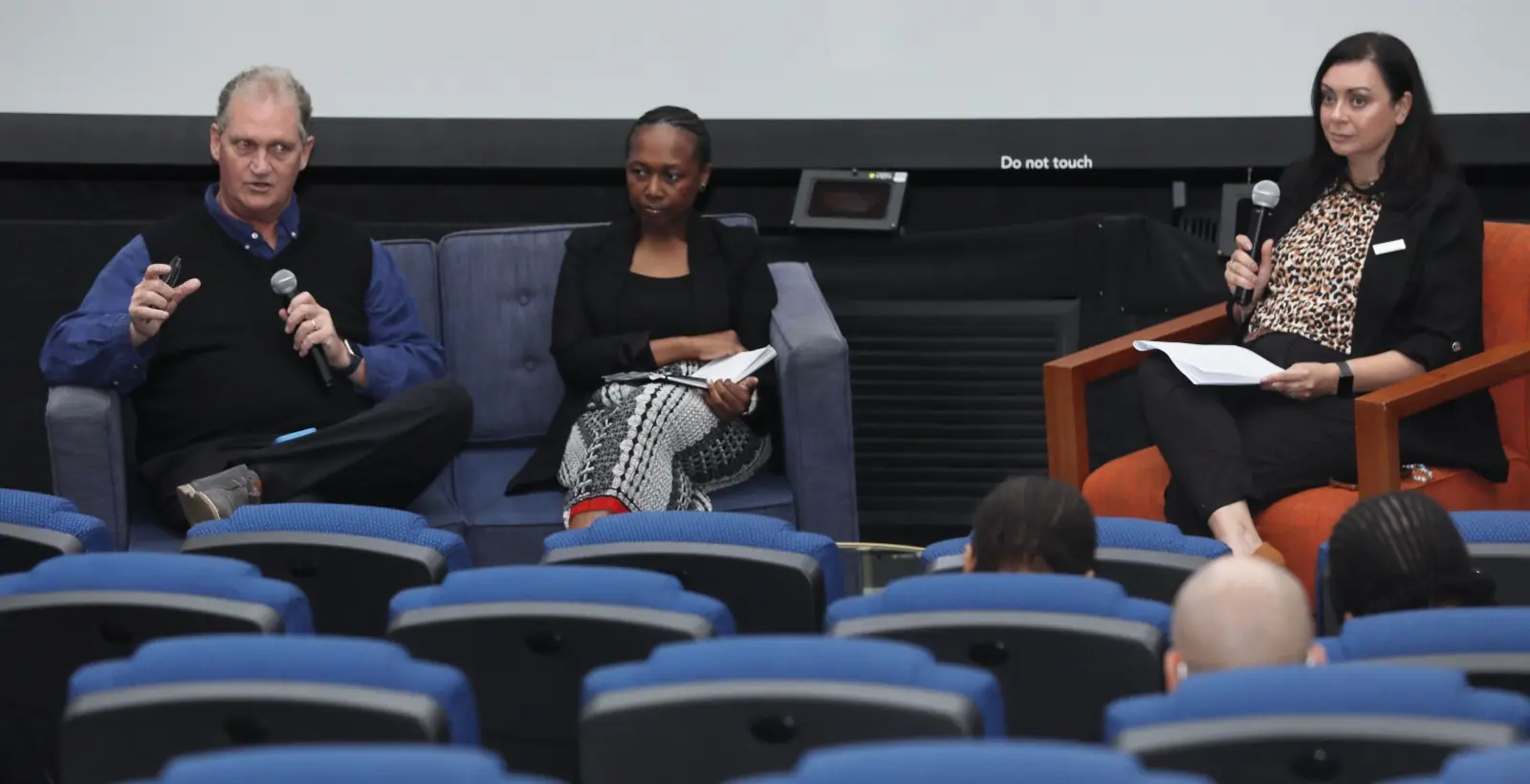
The conference, hosted by Walter Sisulu University and organised by the Business Incubation Web Association, brought together 205 delegates, including small business development minister Stella Ndabeni, higher education and industry leaders, ambassadors, business incubators, entrepreneurs and innovators.
Jack used NMU’s experience to demonstrate how universities could move beyond traditional teaching and play a more active role in developing businesses, creating employment and strengthening local economies.
“Entrepreneurship is no longer optional. It is a necessity, and it must be a centrepiece of our national psyche alongside education and a formal qualification,” he said.
Entrepreneurship was not simply about starting businesses, but about equipping students, graduates and young people with the skills, mindset and resilience needed to navigate an increasingly uncertain economy.
“Our experience has taught us that becoming an entrepreneurial university is about changing institutional culture how we partner with business, industry, government and NGOs; how we use knowledge and how we support and empower young entrepreneurs,” Jack said.
At the centre of NMU’s entrepreneurship drive is the Mandela University Africa Hub, established in 2024 and led by Prof Thobekani Lose.
Between 2025 and 2026, the hub trained 3,035 students and young entrepreneurs from townships and communities.
In the first quarter of 2026, 63 businesses were incubated, resulting in the establishment of 154 jobs and generating turnover of more than R3.6m.
Over the 2025/2026 period, 253 jobs were sustained and more than R32m was raised for entrepreneurship development and support.
Jack said the university aimed to support entrepreneurs throughout the business journey, from mentorship and incubation to development finance, acceleration and expansion.
“We empower and support young people along the whole journey.
"We guide and mentor, we incubate, we assist with development finance, we help them accelerate and upscale, and we measure and monitor our impact,” he said.
The university has also introduced policies designed to make entrepreneurship more accessible to students, including allowing students to operate businesses on campus and employ fellow students, provided their studies remain their primary focus.
The businesses supported through the programme span a range of sectors, including tutoring and media services, website and app development, student accommodation, food businesses, clothing stores, driving schools, pharmacies, hydroponics and fertiliser production.
Lose, who has extensive experience in business incubation and entrepreneurship development, said the role of incubation was to give emerging businesses enough support and protection to become sustainable.
“To incubate is to protect something fragile long enough for it to become strong,” he said, describing entrepreneurs as carrying an “egg” that needed the right conditions to hatch.
“Our job is not to hatch the egg for them. Our job is to keep the temperature right until it cracks open by itself,” Lose said.
He told the young entrepreneurs attending the conference: “You are not the audience of this conference. You are the reason for it.”
Ndabeni also highlighted the need to strengthen the link between innovation, universities and the economy.
She said SA had significant research capabilities within its universities and research institutions, as well as a growing community of innovators and entrepreneurs.
“The challenge is to strengthen the pathways between these capabilities and the economy,” she said.
Promising research needed to be translated into commercialised technologies, products and services capable of addressing challenges facing SA and the continent.
Ndabeni said the government’s broader target was to support a million micro, small and medium enterprises and co-operatives through financial and non-financial assistance.
The department is also developing a One National MSME Plan, aimed at bringing together the commitments of banks, investors, industry, universities, government and state entities.
Reducing red tape and improving access to finance are also key priorities, with the government working on a Startup Policy and initiatives including a Youth Entrepreneurship Fund and an Innovation Fund.
For Jack, access to capital remains one of the biggest factors determining whether incubated businesses can move beyond the start-up phase.
NMU has used its own finance mechanisms to support student and township entrepreneurs, disbursing R2.7m in December 2024 and a further R2.2m in December 2025 through grants of R100,000 to 48 entrepreneurs.
One example is Nosiphiwo Mqoqi, who established a pharmacy in KwaZakhele, where she was born.
After spending 12 years at Aspen Pharmacare, where she rose into leadership positions, Mqoqi decided to establish her own business.
Funding received through the Mandela University Africa Hub in December 2025 enabled her to purchase equipment for the pharmacy’s clinic.
The business now employs 11 people, most from Kwazakhele and Motherwell, while also supporting local school sports, health campaigns and community initiatives.
Further investment in entrepreneurship was secured through the Chancellor’s Entrepreneurship Fund, launched by NMU in February.
More than R10m was pledged during its fundraising gala, alongside in-kind support such as mentorship, internships, business consulting and enterprise development assistance.
Jack said universities also needed to learn from international examples, pointing to a recent visit to Zhejiang University in China, where students have access to a three-storey innovation laboratory equipped with artificial intelligence, robotics, animation and 3D-printing facilities.
The experience, he said, demonstrated the importance of creating environments where young people were given the resources to experiment, innovate and develop solutions.
The discussions at the Business Incubation Web Association conference ultimately pointed to a broader challenge for SA: creating an economy in which young people are not solely dependent on finding employment, but are equipped and supported to create businesses, jobs and new opportunities.
As Lose told delegates, the entrepreneurs emerging from these programmes are not simply beneficiaries of support — they are central to SA's economic future.
Follow The Herald WhatsApp channel today and stay connected to the stories shaping our world.