

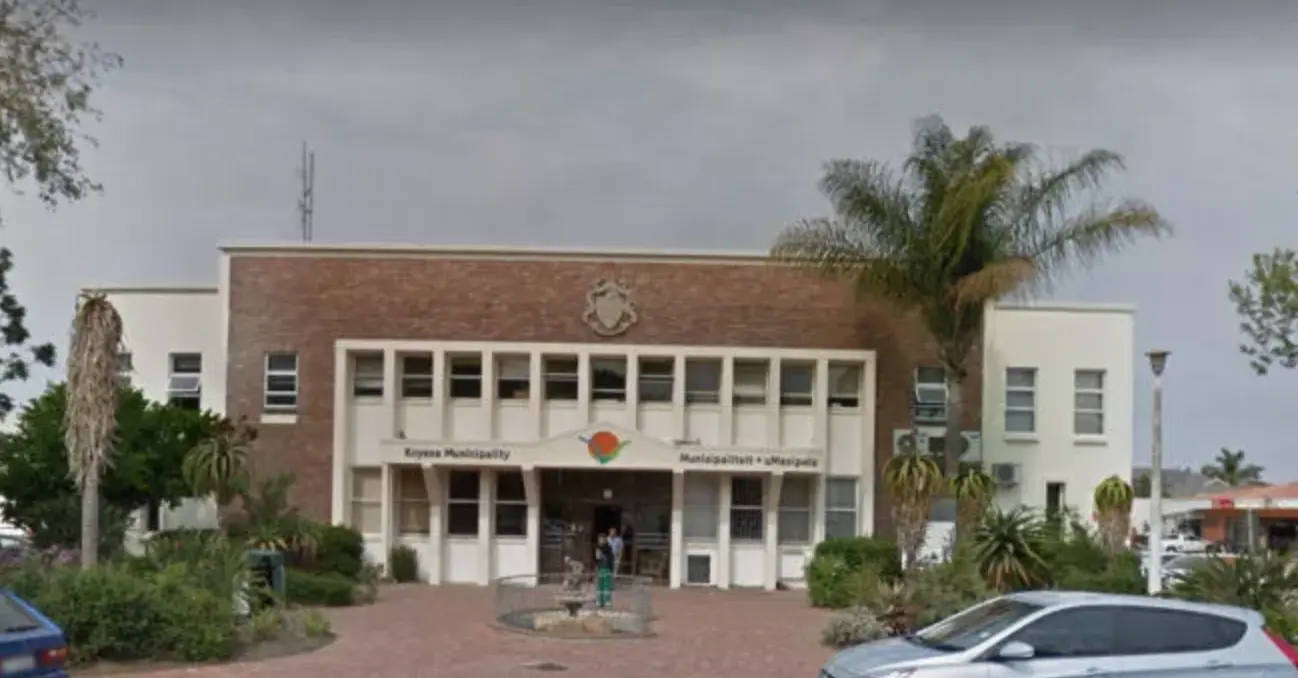
DA supporters in Knysna had hoped to celebrate an outright victory.
The party led the vote count for most of Thursday, and as results came in, supporter excitement grew as it retained several of its previous wards and won two more.
The final results told a different story.
The DA fell short of an outright majority, leaving Knysna facing another coalition government.
According to the final Electoral Commission of South Africa (IEC) results, the DA secured nine seats with 44.41% of the vote.
The ANC was second with 18.71% and four seats.
The Patriotic Alliance (PA) won two seats with 9.97%. The EFF and five new smaller parties each won one seat.
Knysna’s council has 21 seats, so a party needs at least 11 for an outright majority.
The DA is two seats short and will need support from other parties to govern.
After the 2021 local government elections, Knysna’s 21-member council was made up of six parties.
The DA held eight seats and the ANC seven. The Knysna Independent Movement (KIM) and the PA each held two, while the EFF and Plaaslike Besorgde Inwoners (PBI) held one each.
That council was also hung, with no party reaching the 11 seats needed.
The IEC’s 2026 results show five parties entering the council that held no seats before.
They are the SACP, the FF+, the Knysna Civic Alliance (KCA), the People’s Movement for Change (PMC) and Choose CX (CCX).
Each has won one seat.
The EFF held one seat in 2021 and has kept it, while the Knysna Independent Movement (KIM) and PBI have lost their seats.
The number of parties in council has risen from six to nine, bringing more political groups into the municipality’s decision-making.
With no outright majority, coalition negotiations are expected to shape Knysna’s next administration.
The DA will need at least two more seats to reach the 11 required to govern.
The ANC, despite its reduced representation, could also seek partnerships to influence the formation of the new administration.
In neighbouring Bitou municipality, about 90% of votes had been counted by 6pm on Thursday, according to the IEC results dashboard.
At that stage, the DA led with 33.7% and two seats, followed by the ANC with 20.79% and two seats.
The Plett Democratic Congress (PDC) had 8.74% and one seat.
The Active United Front (AUF) stood at 9.61% and the Ikhwezi Political Movement (IPM) at 6.55%, with neither yet holding a seat.
The FF+, which contested several wards previously held by the DA, had 4.27%.
These figures were preliminary, with counting still under way.
The final results will determine how the 13-member Bitou council is made up and whether any party will need coalition partners to govern.
The Herald