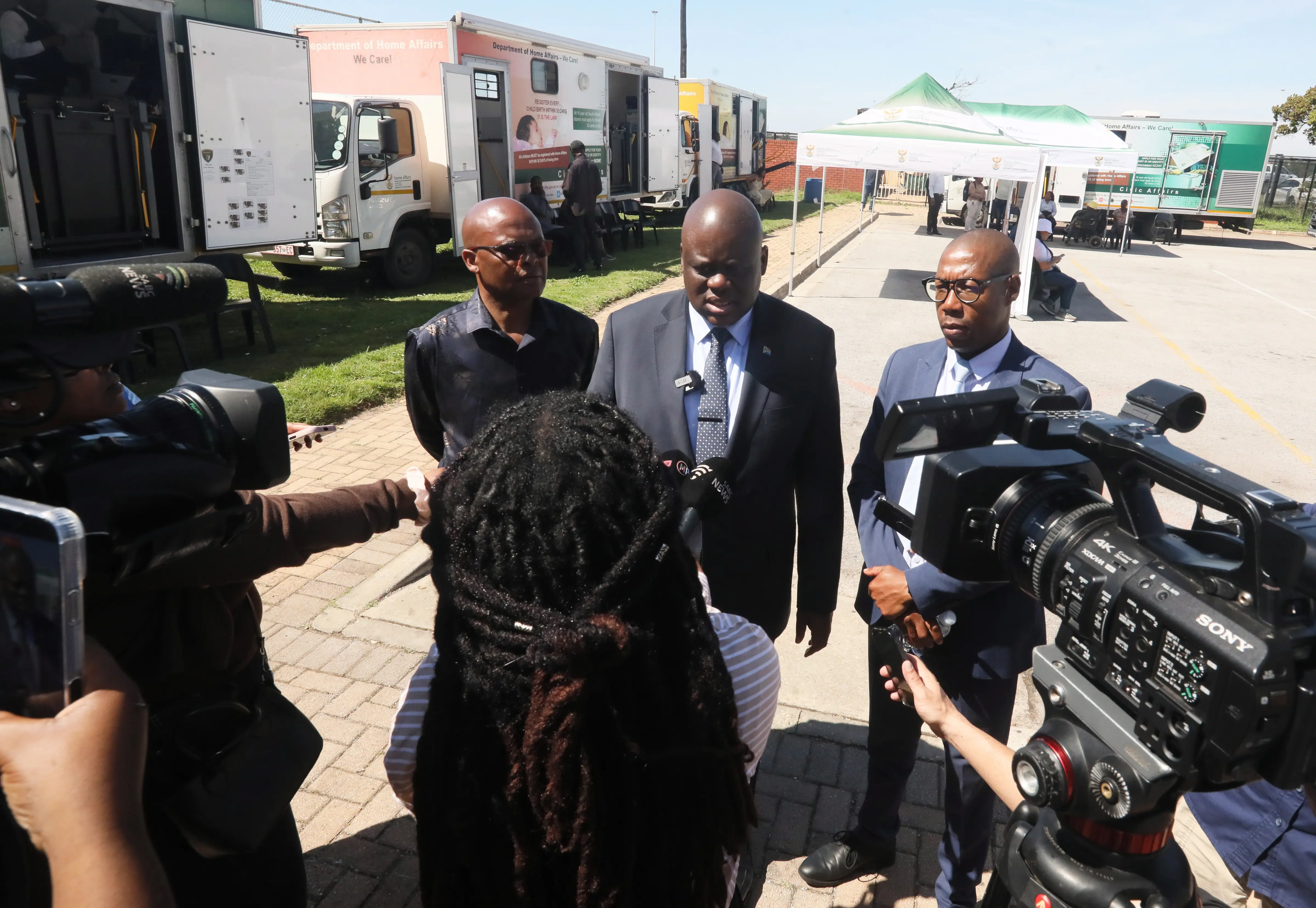
Home affairs deputy minister Njabulo Nzuza visited the Raymond Mhlaba Sports Centre in Motherwell on Wednesday as part of a late registration of birth (LRB) outreach and service delivery programme.
The programme formed part of the department’s efforts to accelerate service delivery and bring essential services closer to communities.
About 65 people who completed the LRB process received their birth certificates from Nzuza, in what the department describes as an ongoing campaign to end invisibility and ensure all citizens are accounted for on the National Population Register.
“We are here today to make sure we push back against the scandal of invisibility whereby we are registering South Africans who have, over time, not had their identity documents."
Nzuza said an e-birth system would soon be introduced, allowing registrations to be done electronically.
“Previously we relied strongly on our infrastructure, by telling parents they must never leave a health facility without registering the birth of their children, but the e-birth system will allow us to register people remotely.
“We [as South Africans] seem to not place a lot of value on the idea of having an identity document until we need to be introduced in the population register, and only then do we realise that this is a very important document.
“We do have a big problem where parents do not register the birth of their children within 20 days, and that is where it starts. After that, it just escalates."
Nzuza said that in the Eastern Cape, only 4,000 births are currently in the LRB space.
“It is not a lot, and the reason I say that is because many others have not even come to our offices.
“What really concerns us are the ones who have not even made the application."
One of the factors that led to late registrations was that parts of the Eastern Cape were traditional areas.
“Parents will come to the hospital and give birth to a child, and they say they are going back home to get the name from the father, and then they don’t return to register the birth of the child.
“The other aspect is fathers who are not present in the birth certificates or in the process of registering their children.
“This is a big problem. We need fathers to play a role."
Nzuza urged mothers to ensure they had the correct documentation.
“We are looking into standard operating procedures to try and make it easier to register the births of their children and make it difficult for any illegal activity or hijacking of the process."
Nzuza said home affairs needed to ensure that people who registered were in fact South African.
“We need to ensure that we are not taking non-South Africans into the population register.
“We then have to have those internal processes which make it a bit difficult to register, which is why we are doing the review of our operating procedures to make it easier for South African children to be registered and more difficult for illegal activity."
Outside the centre, various home affairs mobile trucks helped residents to apply for and collect ID cards and register for various other services.