

SummaryOpen the quick read
- More than 5,000 foundational 'old order' land claims lodged before December 1998 remain unresolved by the South African government.
- The family of late anti-apartheid doctor S.D. Chetty has spent nearly three decades seeking restitution for property seized under the Group Areas Act in South End, Gqeberha.
- Claimants encounter deliberate bureaucratic obstacles, including altered government email addresses, rotating acting commissioners, and evasive form letters.
- State officials continue to minimise historic dispossession by downgrading multi-storey commercial heritage sites to mere empty plots in administrative records.
- Projections suggest the current backlog will take at least 15 years to clear, effectively guaranteeing that original victims will never live to see justice.
Thirty years into democracy, let us strip away the polite political rhetoric and call the land restitution process exactly what it has become: a malicious, calculated waiting game.
The ANC-led government has absolutely no intention of settling the thousands of valid land claims it has weaponised as empty election-season promises for three decades.
Instead, the state has become an absolute master at avoiding accountability, deploying a cowardly strategy designed to wear elderly claimants down until they give up hope or die.
My own family’s exhausting battle in 2026 with the department of land claims proves that the state treats the foundational theft of black property not as a historic injustice to correct, but as an administrative budget line to be starved out of existence.
For more than 40 years, starting in the 1970s, my late father, Dr SD Chetty — affectionately known to generations of local patients as "Doc Sutchee" — was the people’s doctor in Gqeberha.
He worked tirelessly, running a makeshift emergency room next to our family garage to treat activists from the anti-apartheid underground who could not risk public visibility for fear of arrest.
His close friend, judge President Cecil Somyalo, regularly travelled from the Bhisho, Mthatha, and Makhanda courts to our home for medical check-ups and traditional chicken curry.
Yet, despite my father’s total devotion to the very people who now occupy the halls of power, the post-apartheid state has treated his legacy with unadulterated contempt.
My father never forgot the raw humiliation of the Group Areas Act when our family business and residence were brutally uprooted from South End.
Seeking a late sliver of justice, he lodged an official claim with the Land Claims Commission in 1998.
Nearly two decades later, in March 2017 — just five days before he suffered a fatal cardiac arrest — a representative from the department sat in our living room for yet another circular, exhausting discussion.
It was a final, state-sponsored insult before he passed away.
The department’s current operational playbook relies entirely on structural deception.
They shift nomenclature, rotate temporary figureheads — such as recently swapping acting chief land claims commissioner Francois Beukman out for Cindy Benyane — and hide behind broken communication lines.
When I pursued the claim in September 2026, I tracked down officials who quietly changed their public email prefix from @dalrrd.gov.za to @dlrrd.gov.za without updating their website, ensuring citizen queries simply vanished into a digital void.
When I finally cornered the bureaucracy, I was shunted down the line to operational staff, like Nobuntu Matya and Nosiphiwo Jekwa, who specialise in patronising platitudes.
I was slapped with a copy-pasted template promising compensation in the distant "2027/2028" financial years and patronisingly offered a "workshop" on the process.
Meanwhile, officials flatly refused to provide an actual progress report or acknowledge decades of verified legal documentation compiled by our attorney, Roland Meyer.
Worse still is the insulting, historical erasure attempted by modern desk-jockeys.
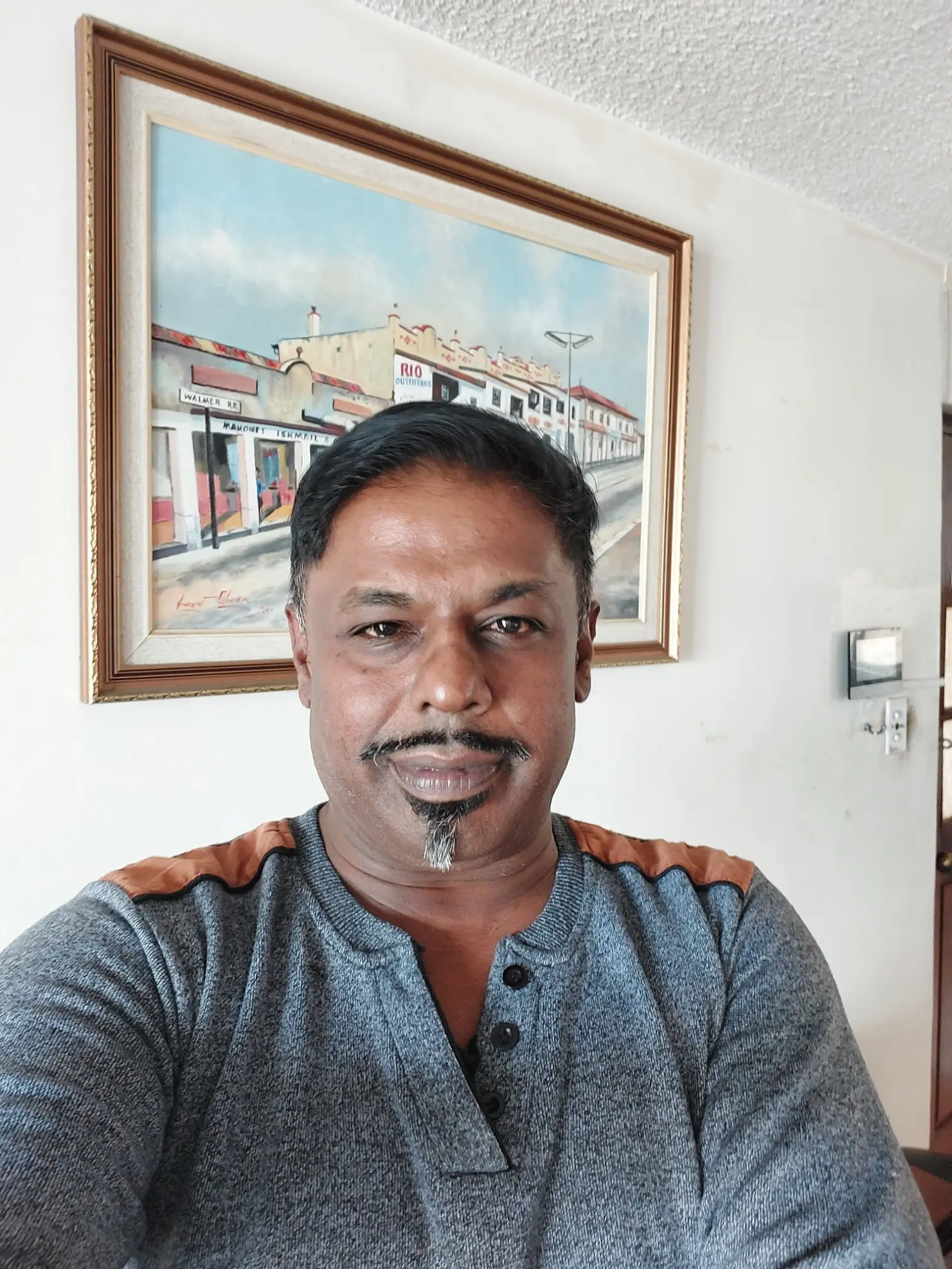
Our family’s vibrant, multi-story commercial building — captured proudly in historic family artwork — featured thriving local enterprises such as Rio Outfitters and Fitwell Outfitters.
Yet, the department insists on clinically downgrading this legacy, treating our heritage as mere empty "plots or erfs".
This is not just bad administration; it is a second dispossession that mirrors the exact spatial erasure practiced by the apartheid regime.
We are far from alone in this nightmare.
A recent 2026 report reveals that 5,160 "old order" claims lodged before the December 1998 deadline remain completely unfinalised.
The Constitutional Court explicitly ruled that these foundational claims must be settled before newer submissions are processed, yet the state has responded by slashing budgets and stepping up its delay tactics.
At the current trajectory, it will take at least 15 years to clear the backlog.
Yet despite their stark inability or lack of resolve to deliver on their previous promises of land reform or restitution, the department of land claims has now “promised to transfer millions of hectares of state-owned land to black farmers communities” while neglecting land taken from their ancestors in what can only be described as a desperate election-season hoax.
The arithmetic of this institutional paralysis is as clear as it is vicious.
By stringing families along for nearly 30 years, the state ensures that the original victims of land theft will never live to see restitution.
This is a monumental betrayal of our history, an absolute denial of justice, and a deep insult to the memory of figures like Doc Chetty who built this city.
We do not need more workshops, temporary acting commissioners, or empty promises for 2027 — change is at hand.
Kamsellin Chetty, scientific researcher, Gqeberha