

SummaryOpen the quick read
- A business session convened by ANC MP Lufefe Mkutu highlighted the Coega Special Economic Zone as a strategic model for industrial transformation and job creation.
- Bureaucratic obstacles such as multi-year environmental impact assessments and unstable water and power supplies pose serious risks to developer confidence in Nelson Mandela Bay.
- Regional leadership across local council, business chambers, and civil society must overcome partisan mistrust to effectively lobby for catalytic infrastructure projects.
- Facing severe global headwinds and threats to the cornerstone vehicle manufacturing sector, the metro must diversify into industries such as citrus, mohair, and ocean processing.
- Plans are underway to engage national ministers, including Kgosientso Ramakgopa and Parks Tau, to address regional energy and trade priorities.
I recently attended a business session at the Sunrise Hotel in Bluewater Bay, organised by ANC MP Lufefe Mkutu.
This beautiful facility was built by SMMEs through the Coega Development Corporation's (CDC) support and is now wholly owned and operated by the entity.
This is a success story that does not get shared often enough in the Nelson Mandela Bay metro and the province.
The main speakers were deputy minister of planning, monitoring and evaluation in the presidency, Seiso Mohai, who is also the chair of the largest asset manager in Africa, the Public Investment Corporation (PIC), as well as public service and administration deputy minister Pinky Kekana.
Among other things, Mohai pledged to use his portfolio at the presidency to facilitate coordination between state agencies to ease the bureaucratic red tape and sylo approach which often frustrates business and potential investors in the metro.
Speakers mentioned it can take up to three years for environmental impact assessments to be concluded before construction of factories can take place.
Developers do not have time to wait that long and will simply move to other regions.
Mohai and the chair of the CDC, which operates the Coega Special Economic Zone, advocate Luvuyo Bono, also highlighted some of the investment opportunities and cooperation opportunities between the metro and the PIC.
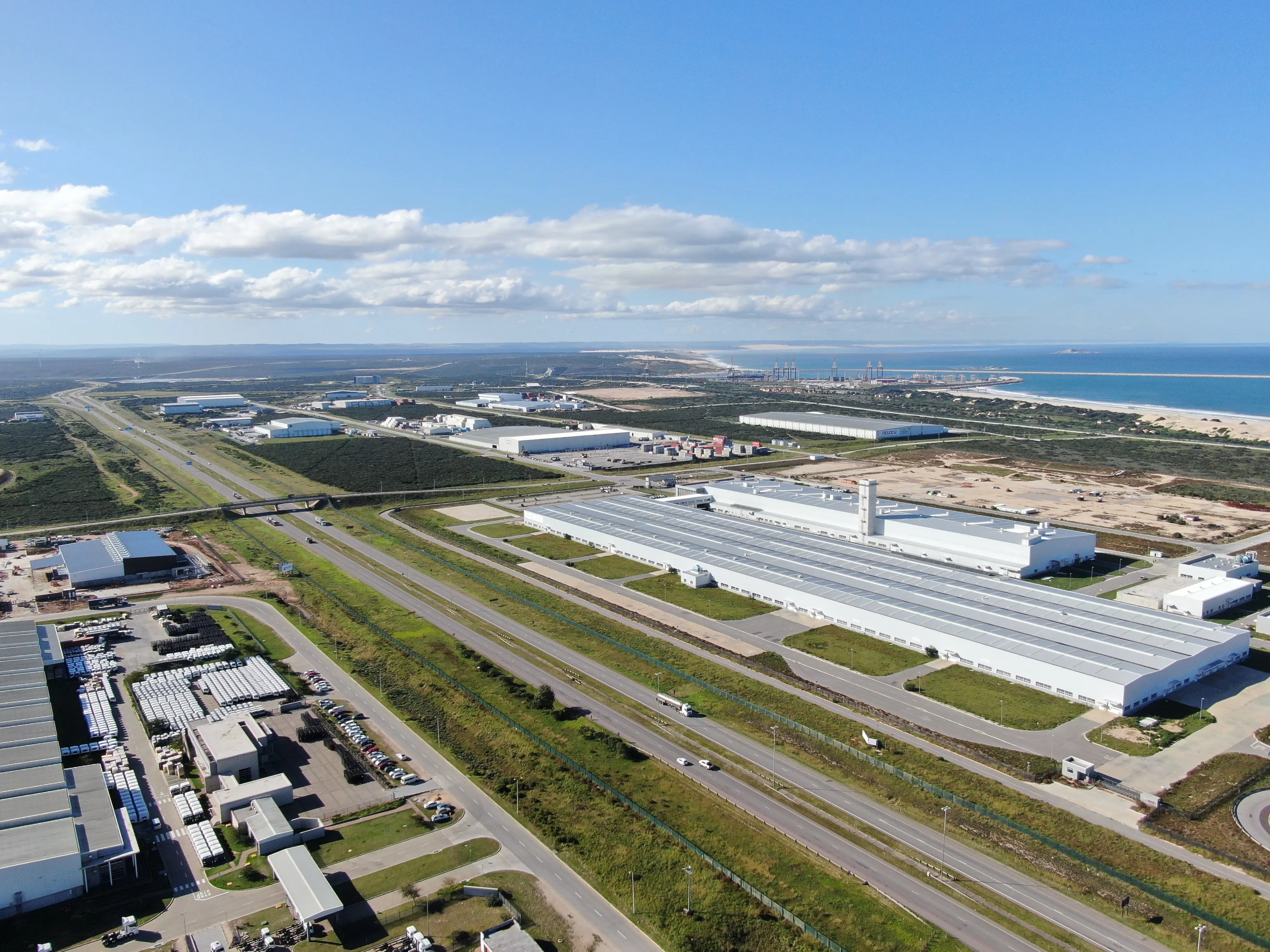
The Coega SEZ has already proven to be an ethically run, highly strategic catalytic asset for the province and the rest of the country.
Earlier this year, it won the prestigious Special Economic Zone of the Year Award for investor attraction, job creation, sustainability, governance, and industrial impact.
It also received the Public Sector of the Year & Sustainable Business of the Year Award at the Nedbank Oliver Top Empowerment Awards 2026.
If citrus, mohair, fish processing and other industries were to set up their plants at Coega and give the entity equity, it would easily be able help with sourcing funding through through the department of trade, industry & competition and help them with opening new global markets.
The provincial government should increase efforts to assist the CDC in achieving its objectives of attracting more investor tenants to the SEZ, financial sustainability, socio-economic transformation and being the implementing agent of choice across the province.
Participants at the meeting identified power and water supply interruptions as some of the primary risks that may discourage investors.
It will require a concerted collective effort by the leadership of the metro including its executive, council, NMB Business Chamber, Civil Society Coalition, Mandela Bay Development Agency and labour to develop and implement innovative, impactful strategies to mitigate these risks.
It is concerning this leadership lacks the unity of purpose to work together for the good of the metro and its residents.
Their relationship seems to be characterised by mistrust, partisan politics and disjointedness.
If they were to work together, they could be a powerful multisectoral investment lobby group to complement the municipality in driving catalytic projects such as destination tourism marketing, the construction of a waterfront, a modern cruise liner terminal, Nelson Mandela statue and precinct, as well as a convention centre big enough to compete with other cities.
Leaders such as Mkutu, with his vision and exuberance need to facilitate information sharing, integrated planning and target setting among these partners.
Parties need to be assured that initiatives such as the session with the two deputy ministers are not merely electioneering gimmicks but are aimed at realising the metro's economic potential.
In my interaction with Mkutu after the event, he confirmed his next target is to bring minister of electricity, Kgosientso Ramakgopa, to meet with a more expanded forum of leaders to address the energy challenges faced by the metro and formulate solutions that enjoy buy-in from all of them.
Perhaps he should also invite minister Parks Tau to discuss opportunities in trade and investment.
A common, non-partisan economic development agenda among the region's key role players is sine quanon for it to realise it's amazing potential.
The fact that it is facilitated by an ANC MP should not be a hindrance in and of itself.
Instead, these roleplayers should optimally leverage Mkutu's position as an MP and ability to lobby and bring in experts who have the demonstrable ability to effect meaningful change and assist all of them to realise their respective goals.
The business chamber's former president Loyiso Dotwana noted that the vehicle manufacturing and components sector — the economic pillar of the region for decades — faces the threat of disinvestment, retrenchments and reduced operating hours.
The region needs to diversify it's sources of revenue and growth beyond the auto sector if it is to be viable.
The US tariff regime, shifting global alliances, Agoa uncertainty, and the ongoing closure of the Strait of Homus are clear examples that the global trade environment is unpredictable and with no room for complacency.
These conditions require focused, visionary leaders who must do everything in their power to retain and expand the jewels the province already has.
Leaders such as Mkutu in parliament and Bono at the Coega IDZ must lobby hard to ensure any and all operational and logistical challenges faced by these industries are addressed swiftly.
Roads from these production hubs must be properly upgraded and maintained.
Logistics and regulatory inhibiting factors must be addressed through regular engagement.
This region is endowed with a strong pool of intellect, the name of one of the world's greatest statesmen, Nelson Mandela, a beautiful coastline, world-class football and cricket stadiums and first-class game parks.
It's time to make these assets work for it.
Mlungisi Ncame is a Johannesburg-based activist from Gqeberha