ALISON STENT
Five Eastern Cape taxi operators have gone from being customers of the automotive aftermarket to owning part of it, forming a co-op that has launched a fixit workshop and spares shop, with government backing.
Together, the five Uitenhage and District Taxi Association members have taken a year to hatch the UDTA Auto Spare Primary Co-operative, pooling R600,000 of their own money, while the Eastern Cape Development Corporation (ECDC) has contributed another R300,000.
With close to 200 potential captive taxi customers operating about 580 vehicles, and based on what UDTA members already spend maintaining and repairing their taxis, they project first-year sales will exceed R1m, said UDTA Project Director Vuyani Kota.
They have decided to reinvest profits for three years rather than distribute them, he added.
Ten permanent jobs have been created, and the plan is to take Midlands TVET College students for workplace experience.
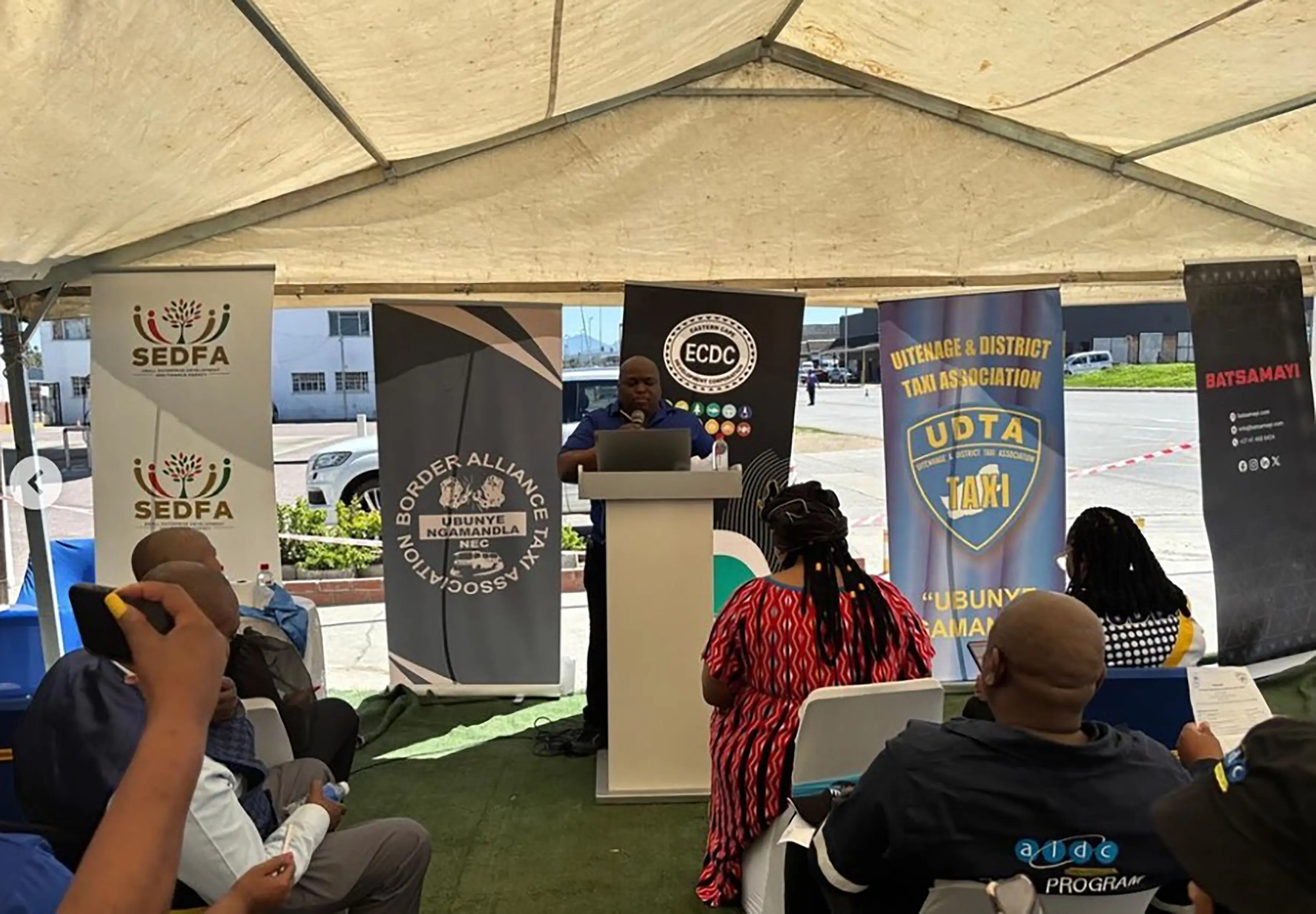
Speaking at the launch of the UDTA Workshop & Spares Facility in Kariega last week, Eastern Cape MEC for Economic Development, Environmental Affairs and Tourism Nonkqubela Pieters challenged the taxi industry to look beyond passenger transport and deepen its participation across the automotive value chain.
“Today is not simply about opening a workshop and spares facility. It is about demonstrating what becomes possible when organised industry, communities and government work together to translate economic policy into practical opportunities on the ground,” said Pieters.
The taxi industry already plays a critical role in the province’s economy and social infrastructure, connecting workers, learners, businesses and communities, but its economic participation could and should extend further into vehicle maintenance, motor spares, local procurement, skills development and other automotive services, she added.
Pieters said the new facility means keeping the spend within the local economy while creating opportunities for emerging enterprises and opening pathways for young people to gain practical automotive skills.
She urged UDTA to view the facility as a platform for growth, diversification and participation in the Eastern Cape’s broader automotive ecosystem.
“The foundation has been laid. The next phase is about building on that foundation through good governance, partnerships, skills and disciplined business practice.”
She said taxi operators are entrepreneurs capable of building sustainable businesses and creating intergenerational economic value.
“As much as you are owners of taxis, you are also owners of your own businesses. You are business people.”
For UDTA, the facility answers an everyday commercial pressure.
“When a taxi is standing, that taxi is not generating income. Every hour that a vehicle remains off the road affects the owner, the driver, the employees and ultimately the passengers who depend on that vehicle,” said Kota on behalf of the UDTA at the official opening.
The cooperative’s ambitions reach beyond its own members. Its identified markets include other taxi operators, private and small fleets, courier and security companies, construction businesses and other vehicle owners in Nelson Mandela Bay and surrounding areas.
The business is expected to create 10 permanent jobs across technical, management, administrative and security roles. Its plan also provides for hosting students from Midlands TVET College for practical workplace experience towards their qualifications.
While this is not the first time government money has met the taxi industry, the UDTA Workshop and Spares Facility is a milestone because of its hyper-targeted local economic approach.
Instead of granting a broad financial loan to buy parts from an established retailer, the local taxi association now owns the infrastructure itself.
Also, the venture actively pairs the Automotive Industrial Development Centre (AIDC Eastern Cape) database of verified local automotive suppliers and aftermarket service providers, large and small, with state training authorities like merSETA, or Manufacturing, Engineering and Related Services Sector Education and Training Authority, one of 21 official Sector Education and Training Authorities established to promote and fund workplace skills development.
In other words, rather than forcing informal mechanics out of business, the the idea is to use the facility to put them through formal Red Seal certification and Recognition of Prior Learning (RPL) pathways.
The ECDC's Imvaba Co-operative Fund has conributed R300,000 worth of machinery and equipment, including vehicle lifts, diagnostic equipment, a tyre changer and wheel balancing equipment.
The R600,000 of the owners went towards renovating the premises, which offers engine repairs, tyre repairs, wheel alignment, gearbox replacement and the sale of automotive parts and accessories.
ECDC’s newly appointed head of enterprise finance, support & fund management, Vuyokazi Zozi, said the support was about more than funding.
“It is about enabling a locally owned enterprise to take ownership of the value chain in which its members participate," she said, adding ownership is central to the model.
“The initiative provides an opportunity for taxi owners to derive greater economic value from their primary business operations by retaining 100% ownership of the auto spares and service facility, effectively becoming both customers and beneficiaries of their own enterprise,” she said.
Zozi added the ECDC would measure the success of the investment by the cooperative's ability to become a sustainable and growing enterprise, retain and create jobs, diversify its customer base and generate sufficient revenue to support its operations and future expansion.
“Success would also mean the investment continues to generate value through job creation, skills development, local procurement and increased participation in the automotive value chain,” she said.