

SummaryOpen the quick read
- Dr Phumzile Mlambo-Ngcuka died at the age of 71 on 20 November 2026, honoured with an official state funeral service.
- She served as South Africa's first female deputy president under President Thabo Mbeki and helped draft the nation's 1996 constitution.
- As executive director of UN Women from 2013 to 2021, she launched the global HeForShe initiative and mobilised $40 billion for gender equality.
- She played a vital diplomatic role as an African Union mediator, helping secure the Pretoria Agreement to end hostilities in northern Ethiopia.
- Her domestic policy work included establishing the Mining Charter, expanding rural electricity, and promoting education through the Umlambo Foundation.
Dr Phumzile Mlambo-Ngcuka’s obituary, read by Thando Mdleleni at her state funeral service.
Early life
Dr Phumzile Mlambo-Ngcuka grew up in Clermont and attended Ohlange High School in Inanda.
She completed her studies in Lesotho, graduating from the National University of Lesotho in 1980, after student politics cost her a place at the University of Zululand. Back in KwaZuluNatal (KZN), she trained teachers and later became one at her former school, Ohlange.
Dr Mlambo-Ngcuka and Mr Bulelani Ngcuka, a lawyer and anti-apartheid activist, planned to get married in December 1981. Little did they know that this was not to be, as the security police detained him on 30 November – a few days before their wedding. She was barred from visiting him in prison, where he was serving a three-year sentence for refusing to testify against a comrade.
She wrote to him until the authorities began intercepting her letters, forcing her and Mr Ngcuka to keep in touch through family members. She married him 12 days after his release in August 1985; after which they returned to Geneva, where their son, Luyolo was born.
During her fiancé’s detention, Dr Mlambo-Ngcuka went on to become the first president of the Natal Organisation of Women, an affiliate of the United Democratic Front in 1983. A year later, she joined the World YWCA in Geneva to work with young people across Africa, Asia and the Middle East. Back home, she worked with community organisations on literacy, rural development and ways for women to earn a living.
Public Service
In 1994, she became a Member of Parliament (MP) in the first democratically elected government, representing the African National Congress (ANC). She chaired the Portfolio Committee on Public Service and Administration and helped draft the Constitution of the Republic of South Africa of 1996, as a member of the Constitutional Assembly. She also served as ANC Deputy Chairperson in the Western Cape and joined the party’s National Executive Committee in 1997.
As Deputy Minister of Trade and Industry from 1996 and later Minister of Minerals and Energy under former President Thabo Mbeki, she was faced with a question of how those previously excluded by apartheid, could also benefit from the country’s mineral wealth. This led her to help pioneer the Mining Charter, to open the industry to Black South Africans. Her Energy portfolio took her into another sphere of daily life, as she worked to extend electricity to communities who were still waiting for it.
In 2005, former President Mbeki appointed Dr Mlambo-Ngcuka as Deputy President of South Africa, where she led government efforts to accelerate growth and spread its benefits more widely. Through the Joint Initiative on Priority Skills Acquisition, she championed routes into work for young people, including internships abroad. In 2007, she led the relaunch of the South African National AIDS Council; bringing government, civil society, business, labour and people living with HIV together to shape the country’s response. She held the position of Deputy President until 2008.
Even with a demanding work schedule in Cabinet and her many other responsibilities, Dr Mlambo-Ngcuka completed a Master’s degree in Educational Planning and Policy from the University of Cape Town. After leaving government, she founded the Umlambo Foundation to support school principals and teachers.
For her Engineering Doctorate at the University of Warwick, her research explored how teachers in four under-resourced South African schools could use mobile learning to develop their digital skills. She became Chancellor of Tshwane University of Technology from 2007 to 2015 and University of Johannesburg (UJ) Chancellor in 2022.
Humanitarian and peace-keeping work
From 2013 to 2021 Dr Mlambo-Ngcuka served as United Nations (UN) Under-Secretary-General and Executive Director of UN Women for eight years. These roles placed her in a position to convince governments around the world to tackle violence against women and girls, expand women’s economic opportunities and make room for women in political life.
She launched the “HeForShe” global campaign to bring men and boys into that work. In 2021, UN Women convened the Generation Equality Forum with Mexico and France, working with civil society and young people. The forum secured US$40 billion in financial commitments for gender equality.
In Syria, the question was who got a say in peace-making. Under her leadership, UN Women supported the Syrian Women’s Advisory Board, through which women could advise the UN Peace Envoy directly. In Pretoria in 2022, Dr Mlambo-Ngcuka sat on the African Union (AU) panel that convinced the Ethiopian government and the Tigray People’s Liberation Front to reach a cessation of hostilities agreement.
Her fellow mediators were former presidents, Mr Olusegun Obasanjo of Nigeria and Mr Uhuru Kenyatta of Kenya. The agreement, which later became known as the Pretoria Agreement, opened the way for humanitarian access and restoration of essential services. In 2025, she joined the AU’s Panel of the Wise, which advises on preventing and resolving conflicts.
Dr Mlambo-Ngcuka also co-convened South Africa’s G20 Social Summit in 2025, where civil society organisations and community groups put their priorities before global leaders. She championed its legacy projects on education and financial inclusion, as well as proposals for a South African Sovereign Wealth Fund and a Pan African Wealth Fund. The proposals addressed infrastructure investment, youth unemployment and the interests of future generations.
As a member of the Gender Equality Advisory Council under France’s G7 presidency, she examined how demographic policy affected women. In Berlin, as a Richard von Weizsäcker Fellow, she studied how Germany prepared young people for the world of work. After more than four decades since her teaching days at Ohlange, she still wanted to know what came after the classroom.
Honours and affiliations
Dr Mlambo-Ngcuka received Honorary Doctorates from Witwatersrand Technikon (2003), University of the Western Cape (2007), Nelson Mandela Metropolitan University (now Nelson Mandela University) (2014), University of Fort Hare (2016), UKZN (2018), WITS University (2019), Rhodes University (2020), University of Edinburgh (2022) and University of the Free State (2024). In 2026, the University of Warwick conferred an Honorary Doctor of Science in recognition of her work in gender equality, sustainable development and social justice.
Roles and affiliations in organisations, boards, councils and other initiatives
Her roles and affiliations included:
The African Leadership Academy Global Advisory Council
• African Leadership Academy
• African Women’s Leaders Network
• Anushkaa Foundation for Eliminating Clubfoot Special Advisory Board
• Global Citizen
• Global Surgery Foundation
• Global Fund for Women Global Partnership and Fund to End Violence Against Children
• Grassroot Soccer
• Group of Women Leaders
• G7 Gender Equality Advisory Council
• International Telecommunication Union
• International Women’s Forum of South Africa • International Women’s Forum Hall of Fame Honouree Ivanhoe Mines
• Just Exchange
• Mercedes-Benz South Africa
• Smart Grid
• South African Women in Mining Association
• South African Women in Dialogue
• South African Women Entrepreneurs Network South-North Commission
• Mandela Rhodes Foundation
• The Reading Panel
• Tana High Level Forum on Security in Africa
• Technology Women in Business
• The Business Trust
• UNESCO UJ Council
• UN Tourism World Committee on Tourism Ethics
• Women’s Development Foundation
• Women Deliver
• Women Political Leaders Global Advisory Board
• World Bank Group Advisory Council on Gender and Development
• World University Service South Africa.
Final days
Mama Phumzile passed away on 20 November 2026, aged 71. She is survived by her husband, Mr Bulelani Ngcuka; her son, Mr Luyolo Ngcuka and daughter-in-law, Mmabatho; granddaughter, Wadewafika Nomkhosi Zingisa; brothers, Zipho and Bonga; and many other children from her extended family.
Since Mama Phumzile’s departure, people who knew her at different times in her life, have shared their memories with her family. The teacher from Clermont who later helped write the Constitution of a democratic South Africa, became its first woman Deputy President and led the emancipation of women worldwide, was loved dearly and will be missed deeply.
Hamba kahle, Mama Phumzile.
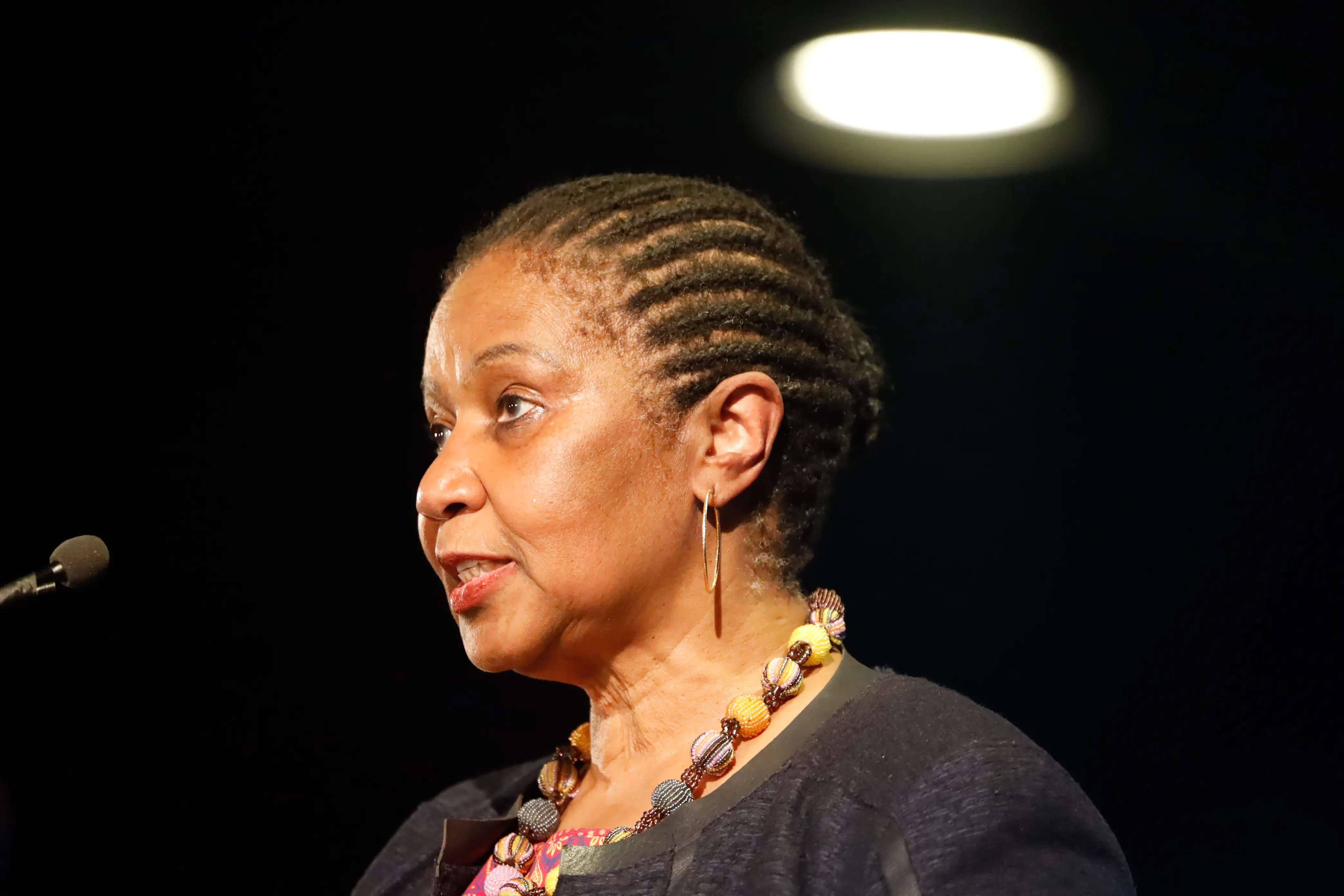
Dr Phumzile Mlambo-Ngcuka at the G20 Social Summit: Opening Ceremony at Birchwood Hotel and OR Tambo Conference Centre on November 18, 2025 in Boksburg, South Africa. The G20 Social Summit brings together a wide spectrum of stakeholders including governments, civil society, labour, youth, women, persons with disabilities, philanthropy, and grassroots organisations ensuring that the lived experiences of ordinary people shape the outcomes of the G20 process.
Picture: Gallo Images/Sharon Seretlo