

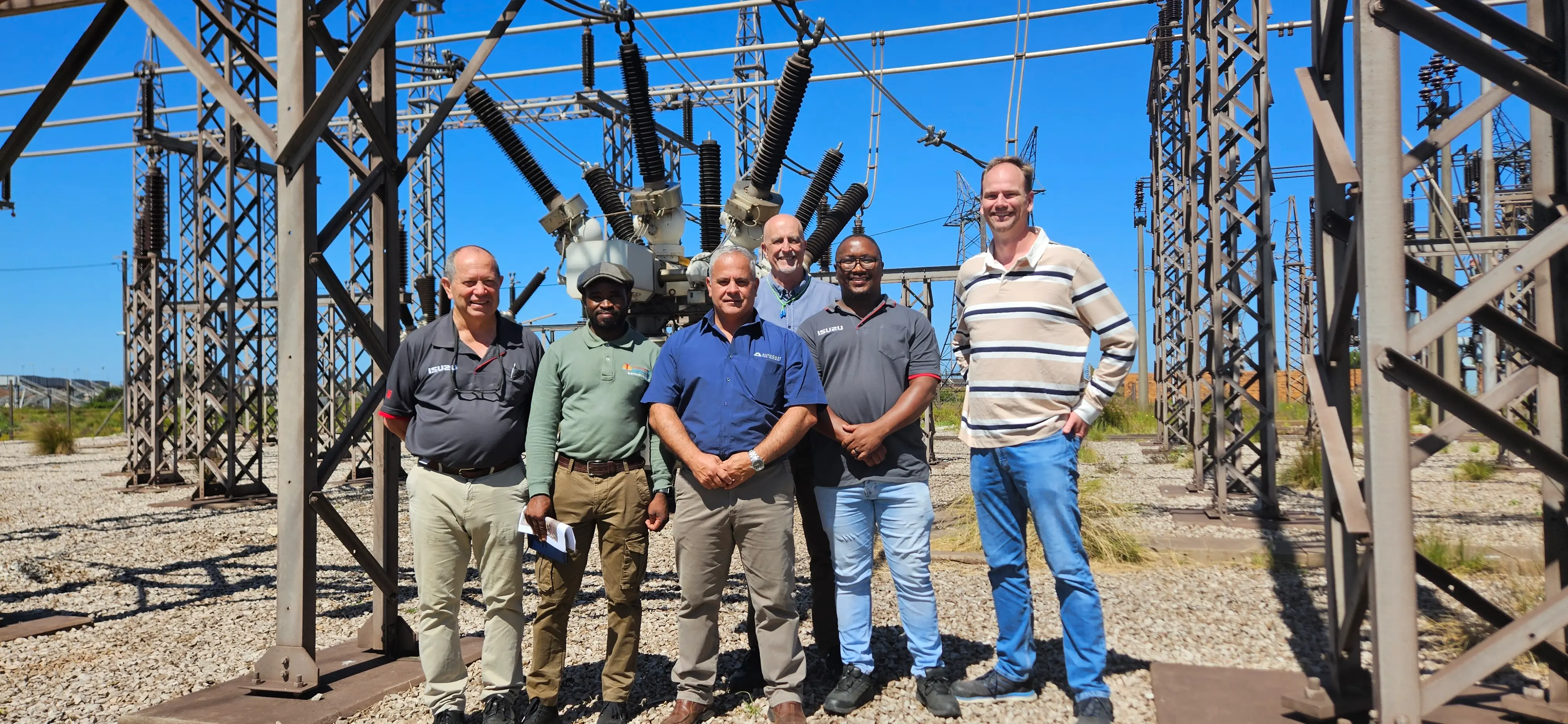
Repeated vandalism of the Swartkops Substation has left businesses in Deal Party and Struandale facing power disruptions and losses running into millions of rand.
In response, organised Nelson Mandela Bay business has mobilised close to R1m for security upgrades to protect the critical electricity installation.
The Ezethu Development Trust, the initiative’s largest contributor, has donated R500 000 towards the security upgrades.
Chairman of the Ezethu Development Trust, Odwa Mtati, said the contribution was driven by an understanding of the significant hardship caused by the ongoing power disruptions and the need for practical interventions to protect businesses and livelihoods.
“We recognise the devastating impact that repeated power disruptions have on businesses, their employees and the broader local economy.
"Our contribution is an investment in protecting critical infrastructure, supporting business continuity and helping to mitigate the ongoing risks facing businesses in Deal Party and Struandale.
"We believe that collective action is essential to safeguarding the economic activity and jobs that depend on reliable electricity supply,” Mtati said.
The Nelson Mandela Bay Business Chamber said the intervention reinforces the urgent need for the municipality to take decisive and legally bound responsibility for safeguarding critical infrastructure across the metro by deploying adequate surveillance, monitoring, fencing and other vital support.
The intervention is being driven by the Chamber’s Deal Party and Struandale geographical clusters following repeated attacks on the substation over the past three months.
The urgency was underscored by a recent unplanned 13-hour power outage that left businesses in both industrial areas without electricity, resulting in millions of rand in additional operational costs and business losses, and workers being placed on short-time.
In response to the substation’s vulnerability, the two clusters engaged the Nelson Mandela Bay Municipality’s electricity and security departments to identify measures to prevent further vandalism.
Following these engagements, it was agreed that business would mobilise the funding needed to install an adequate perimeter fence, at an estimated cost of about R1m.
Contributions to the funding drive have been secured from the Ezethu Development Trust, the Deal Party Cluster, S&N Rubber, Isuzu Motors South Africa, Autocast, BASF and Continental Tyre SA.
The Struandale Cluster has committed to covering the outstanding amount, together with any additional costs required to complete the project.
The Struandale Cluster has already installed surveillance cameras around the substation and deployed its dedicated cluster patrol vehicle to strengthen monitoring.
Nelson Mandela Bay Business Chamber Chief Executive Officer Denise van Huyssteen said the intervention demonstrated what organised business could achieve when collective resources, expertise and leadership were directed towards a shared economic priority.
“Critical infrastructure is the backbone of our economy.
"When a substation is vandalised and electricity supply is disrupted, the consequences ripple through businesses, production lines, supply chains and livelihoods.
"Protecting this infrastructure is fundamental to economic resilience, investment confidence and job security.
“What makes this initiative particularly encouraging is that our clusters have translated concern into action.
"They have brought businesses together, engaged the relevant municipal departments, mobilised substantial financial contributions and are helping to protect infrastructure vital to two important industrial areas. This is what meaningful collaboration and business leadership look like."
However, she said, there is an important distinction between business supporting solutions and business having to assume responsibility for protecting public infrastructure.
"Our members are prepared to contribute to a better-functioning metro, but they cannot be expected to continually fund the protection of municipal assets. The municipality must fulfil its responsibility.
“We are therefore calling on the municipality to implement a comprehensive security programme for critical electricity infrastructure across Nelson Mandela Bay.
"This should include appropriate perimeter fencing, surveillance cameras, continuous monitoring and armed response where necessary, supported by a coordinated, adequately resourced and sustainable municipal security strategy.
“Business has demonstrated what collective action can achieve at Swartkops. But we cannot have a situation where businesses must mobilise nearly R1 million to protect one substation while other critical infrastructure across the metro remains exposed.
"The municipality must now take a proactive, metro-wide approach.”