The Herald
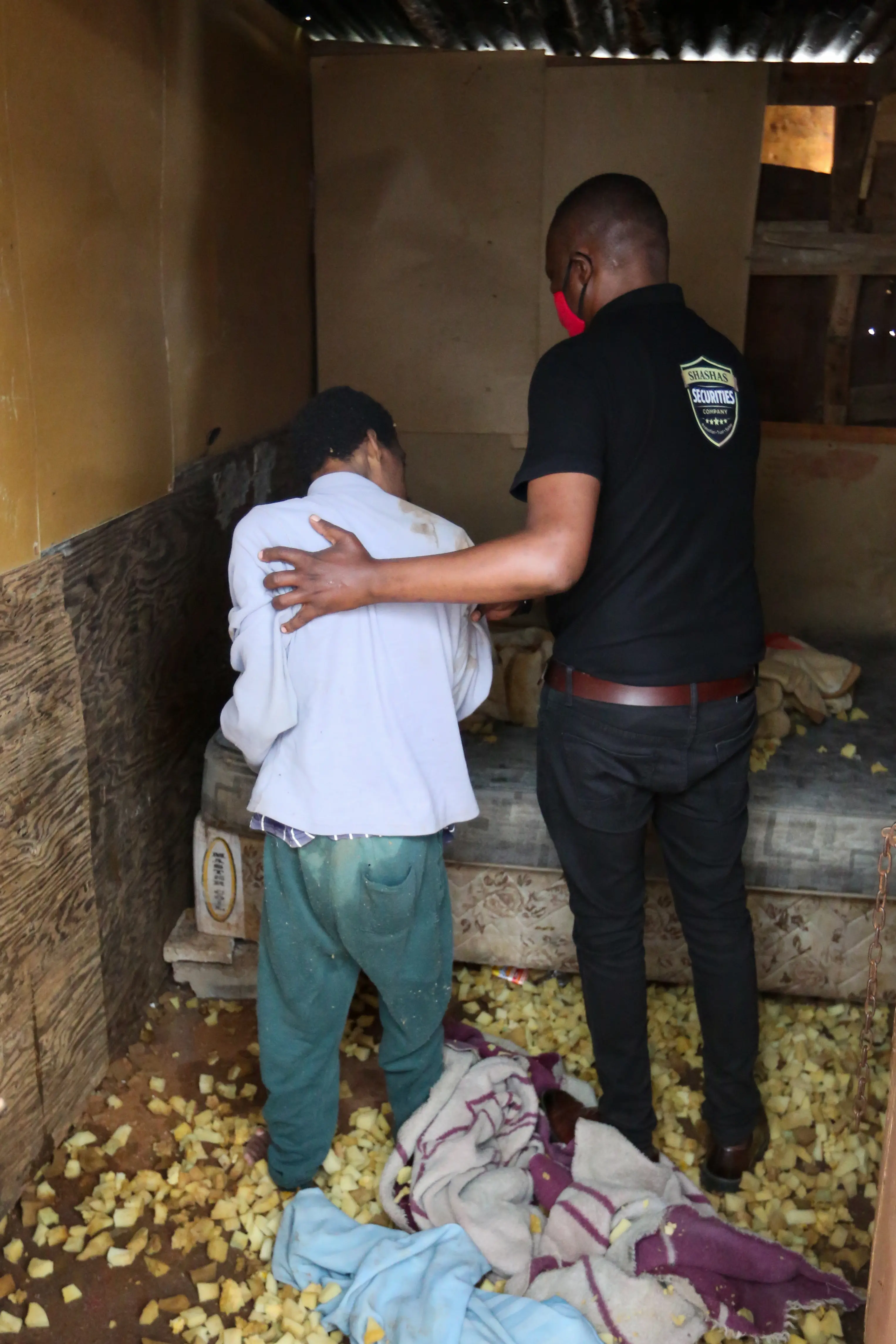
Simphiwe Hobanie of Shasha's Security Company assists the disabled man in KwaNobuhle, Kariega
Simphiwe Hobanie of Shasha's Security Company assists the disabled man in KwaNobuhle, KariegaPicture: Werner Hills

Disturbing discovery in Kariega shines light on struggles of families managing severely disabled people without support

Frail KwaNobuhle man's living hell

Cold, wet and hungry, an intellectually challenged 35-year-old is kept locked up in dark, leaking shack

A frail 35-year-old man living with physical and intellectual disabilities was discovered locked inside a leaking, dark backyard shack in KwaNobuhle, Kariega, where a chain secured the outside door. Shivering in damp clothing and pleading not to be beaten when discovered, his distressing plight has triggered urgent community intervention and highlighted the plight of vulnerable adults lacking state-supported institutional care.

SummaryOpen the quick read
  • A 35-year-old physically and intellectually challenged man was discovered inside a dark, wet backyard shack in KwaNobuhle following a community tip-off.
  • Community activist Ntombozuko Jafta led the intervention, discovering the man severely undernourished, cold, and begging not to be harmed.
  • Relatives confirmed they manage his state disability grant but stated they have struggled to handle his behaviour and medical conditions since his grandmother died in 2020.
  • Family members denied abandoning him, claiming they attempted to house him in the main residence but lacked access to suitable specialised facilities.
  • Steps are under way to admit the man to Livingstone Hospital for assessment ahead of a potential long-term placement at Fort England Psychiatric Hospital, while potential neglect charges are being considered.

A frail 35-year-old man with physical and intellectual challenges has been found in a dark, leaking shack in a Kariega township, where a chain across the door appeared to prevent him from leaving.

His family says they have struggled to care for him since his grandmother died, while a community intervention has raised urgent questions about his living conditions and access to appropriate care.

When a policewoman opened the shack door on Monday, the first thing the man asked was not who had come to see him, or why strangers were standing at his door. Instead, he pleaded not to be beaten.

Then, reassured that no-one was there to hurt him, the painfully thin man asked for food.

He was hungry, cold and visibly distressed.

The man, whose identity is being withheld to protect his dignity, was found lying on a bed without sheets or pillows in a dark shack in Khayelitsha, KwaNobuhle, on Monday.

A single blanket was tossed to the side.

A chain secured the door from the outside, preventing him from opening it himself.

Inside, rainwater had seeped through the leaking roof onto his mattress, leaving it visibly wet after two days of rainy weather in Nelson Mandela Bay.

Torn pieces of sponge which looked like they came from the inside of a foam mattress lay scattered across the floor.

A bucket beside the bed appeared to have been used as a toilet.

His clothing was wet, and his thin frame shivered in the cold.

There were no signs of basic comforts. The man's circumstances raised urgent concerns about his safety, hygiene, nutrition and freedom of movement.

The Herald visited the property with Ntombozuko Jafta, the 2022 Herald Citizens of the Year Awards winner in the gender-based violence category, KwaNobuhle police sergeant Kia Kamba-Beja and Simphiwe Hobanie of Shasha's Security Company.

Jafta, who heads the TWYST Foundation (Transforming Women and Youth in Social Trends), said a concerned community member from Ward 52 had approached her after learning about the man's circumstances.

Jafta said she was worried by what she was told, particularly because he reportedly received a disability grant but appeared to be living without adequate care.

“I was very disturbed when they described his living conditions,” she said.

According to Jafta, residents had assumed the man had been taken elsewhere after the death of his grandmother, who had cared for him.

They later discovered he was still living in the shack.

On October 14, residents reportedly became aware of his circumstances again after he attempted to remove a bucket from the shack and fell.

Jafta said community members told her they had previously tried to check on him but found the door secured with a padlock.

When the team arrived on Monday, the door was chained shut, but there was no padlock.

“It is terrible how he has been living. It is inhumane,” Jafta said.

“We cannot leave him here. We have to help him.”

But behind the disturbing scene lies a complicated family situation, with relatives insisting that they have not abandoned the man and have struggled for years to provide the care he needs.

A 56-year-old family member arrived at the property after learning of the intervention.

He said the man's grandmother had taken him in after her daughter died and had been his primary caregiver until her death in 2020.

He said the man had experienced physical and intellectual challenges from a young age and also suffered from seizures.

“He is our cousin, so what can we do? We cannot give up on him,” the relative said.

He said the family had tried to accommodate the man in the main house but found it difficult to manage his needs.

He would sometimes leave the property, requiring relatives to search for him, and also allegedly damaged household items on occasion.

The relative said one of the man's hands was disabled but that he could use it for certain tasks, such as bathing.

He had been living in the shack, which had previously burned down and was rebuilt in about 2019.

The man had been receiving treatment for seizures and had not experienced one for about three months.

The relative said caring for him had been difficult, adding that his sister kept the man's grant card and bought groceries and clothing for him.

The sister, 58, confirmed that she managed the grant card and helped provide for her ailing relative, with groceries kept by her brother and his girlfriend.

She said the family had struggled to care for him because of his needs, including difficulties with personal hygiene, his alleged tendency to tear clothing and blankets, and behaviour that made it challenging to keep him in the main house.

“He does not sleep. He talks all the time, so he still lives in the shack, but we make sure he gets food to eat and clothes to wear.”

She said the family believed he needed specialised care but had not been able to establish what assistance was available or how to secure admission to a suitable facility.

The brother and sister denied abandoning the man and said they would welcome assistance to ensure he received the care he needed.

However, their account did not resolve the concerns about the conditions in which he was found.

Jafta said she had contacted Fort England Psychiatric Hospital in Makhanda in an effort to secure appropriate care for the man.

The hospital had indicated that it was willing to assist but that he would first need to be admitted to Livingstone Hospital for about two weeks for health assessments.

She said she had been given the contact details of Livingstone Hospital's chief executive to discuss the next steps, with the longer-term aim of securing placement at Fort England.

Jafta said the man's living conditions could further compromise his wellbeing, particularly if he continued to lack adequate nutrition, hygiene and freedom of movement.

She planned to report a complaint against the siblings for alleged negligence, citing what she described as inhumane living conditions and inadequate caregiving.

She had not yet reported the complaint to the police by the time of publication.

Follow The Herald WhatsApp channel today and stay connected to the stories shaping our world.

The Herald

In Related News