

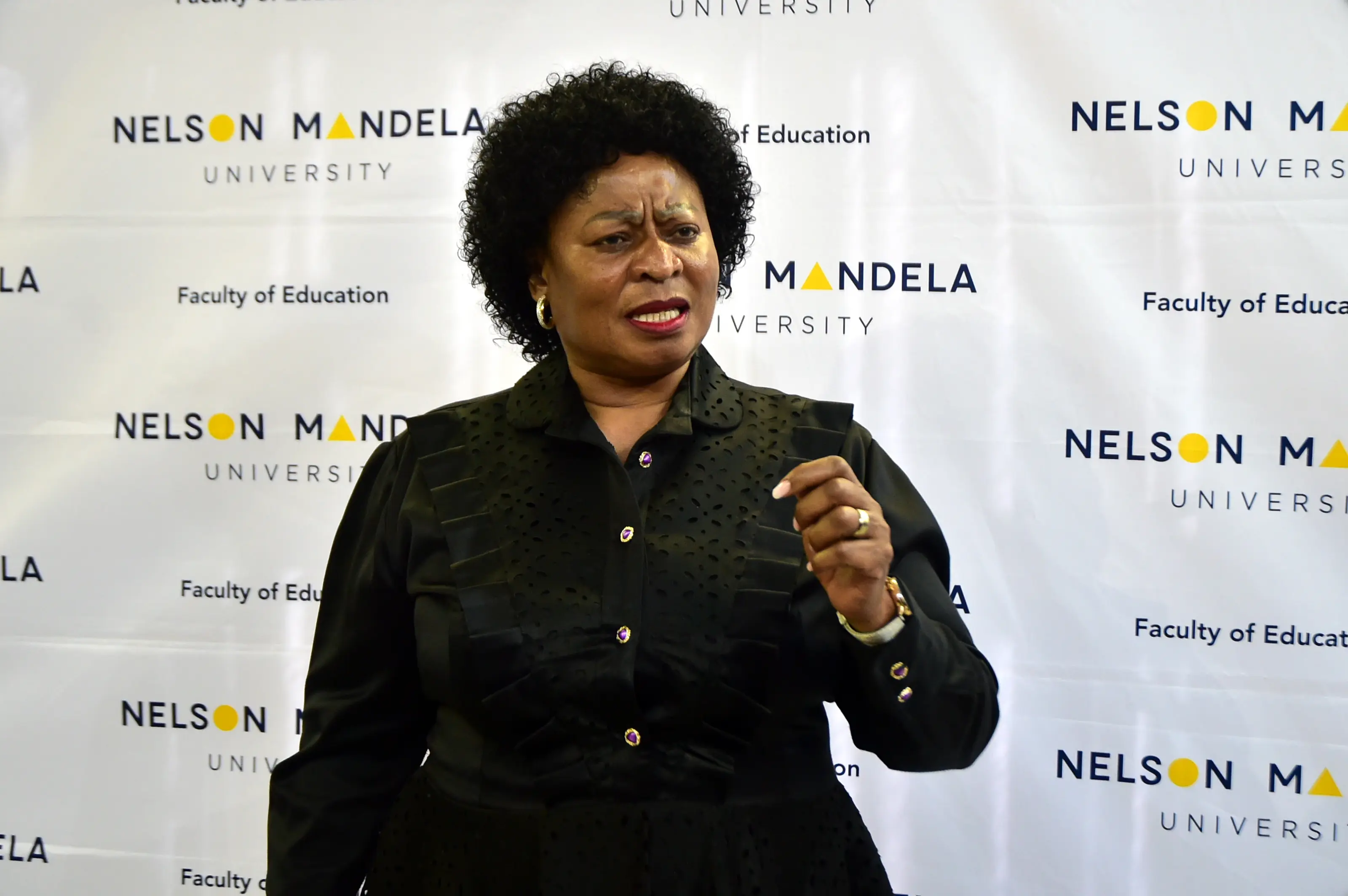
The annual Nelson Mandela University's Teacher Education Symposium has brought sharp focus to the rapidly changing teaching environment in an ever-changing technological world.
The three-day symposium, which started on Wednesday under the theme "Reconfiguring teacher education for a technologically enriched socially just and transformative future", drew dozens of teachers, stakeholders and industry leaders.
The symposium is a platform that aims to engage critically with the changing landscape of teacher education and schooling.
On Thursday, guest speaker and deputy minister for basic education Dr Makgabo Reginah Mhaule said it was particularly fitting they had gathered during October, a month dedicated to celebrating and recognising the invaluable work of teachers.
Currently, SA has 26 public higher education institutions and 85 private higher education institutions with 23 public institutions as well as 15 private institutions offering recognised Initial Teacher Education qualifications, Mhaule said.
Together, the institutions produced about 30,000 to 34,000 newly qualified teachers annually across the Bachelor of Education, Postgraduate Certificate in Education and advanced qualifications, she said.
While this represented a significant national capacity, teacher production remained uneven across phases, subject specialisations and subject combinations.
"The country continues to experience shortages in foundation phase teachers, African language, mathematics, physical sciences, technology, engineering, inclusive education and as well as technical and vocational subjects," Mhaule said.
"Consequently, teacher supply should increasingly be planned according to teacher workforce demand rather than institutional capacity alone.
"This requires stronger alignment between the needs of the basic education system, teacher education institutions and the broader national development agenda.
"The sector must ensure that the teachers we prepare correspond to the needs of our schools and the skills required by our learners."
She said digital learning, AI, coding and robotics could not be advanced without teachers who were confident and competent in those subjects.
"Teacher development therefore is not an isolated human resources intervention, it is a strategic investment into the future of SA.
"The National Development Plan 2030 recognises teachers as the single most important school-based factor influencing learner achievement.
"Similarly, the Integrated Strategic Planning Framework for Teacher Education and Development positions teacher education and development as a national priority for improving learning outcomes and building a capable state.
"Our task, therefore is not simply to produce more teachers.
"Our task is to produce the right teachers, with the right competencies, in the right specialisations, for the right phases and for the diverse realities of SA schools."
The minister also praised NMU for the role it played in strengthening teacher education in the Eastern Cape and nationally.
"The university annually contributes several hundred newly qualified teachers into the national education system, many of whom serve schools across rural, township and under-served communities."
NMU dean of education Professor Heloise Sathorar said contemporary schooling placed increasingly complex demands on teachers and teacher education institutions.
"The 2026 symposium is therefore conceptualised as a three-day intellectual and professional journey connecting knowledge generation, stakeholder dialogue, professional practice and impact," Sathorar said.
"It recognises that the reconfiguration of teacher education cannot be achieved by universities in isolation, but requires meaningful collaboration among researchers, teacher educators, policymakers, schools, teachers, communities, graduates, and other stakeholders within the education sector."