

Rhodes University students have rejected a new 2027 fee-payment protocol that requires self-funded students with outstanding debt to pay at least half of what they owe before registration, saying the measure will put higher education beyond the reach of students who cannot afford it.
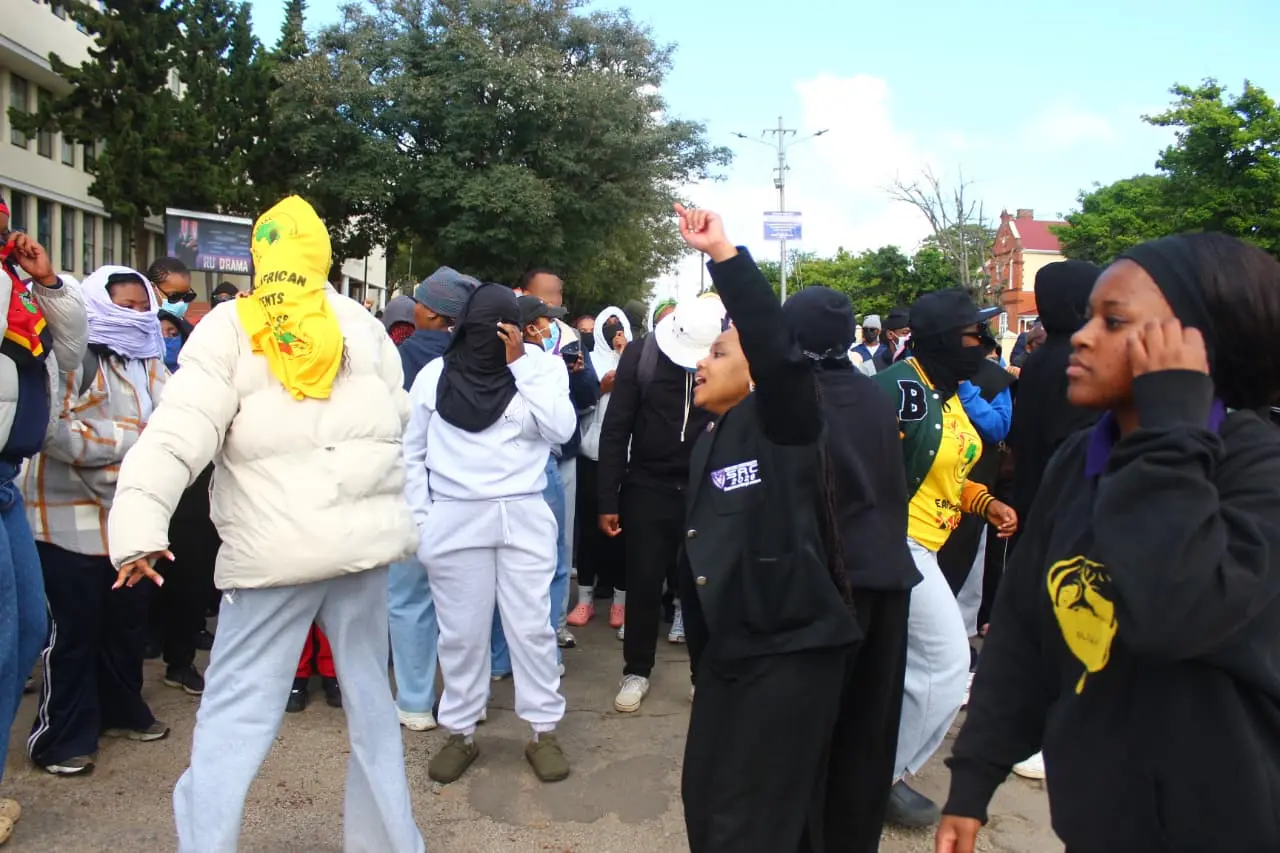
The dispute boiled over into a protest on campus on Tuesday, with students forming barricades at the entrances and declaring the academic programme suspended until an agreement is reached.
At the centre of the dispute is the university’s decision to introduce stricter payment requirements.
Under the new protocol, self-funded undergraduate students with outstanding balances will have to pay at least 50% of their debt and commit to paying at least R3,000 a month towards the remaining balance.
Students whose debt at registration is above R25,000 will also not be admitted to residence unless they have confirmed National Student Financial Aid Scheme (NSFAS) funding.
The SRC has rejected the measures, saying they fail to take into account the socioeconomic circumstances of the student body.
“The issue is not only the protocol itself, but also the university has once again failed to communicate with students about a decision that directly affects their ability to register, access residence and continue with their studies,” the SRC said in a statement on Sunday.
Speaking to the Dispatch at the barricade, SRC secretary-general Keketso Dibakwane said: “Yesterday we had a meeting between the student body and executive management.
“We invited them to explain exactly how they got to this document.
“We were not happy with the response we got and so as a student body we decided we are going to take to the streets.
“At the beginning of the year, the SRC negotiated from 50% to 20%. Today we find ourselves in the very same position we were in at the beginning of the year.
“It means that next year’s SRC, next year’s students, will have to face the same issue all over again.
“Students simply don’t have the money to pay their debt.
“The university has to meet them halfway. Find out how much they actually can pay.
“And you can only find out by sitting down with them and engaging on the matter.”
Students have voiced fears that the new protocol will affect their futures.
“I’m currently under NSFAS and doing my final year,” said Lilitha Mahuza, who hopes to begin postgraduate studies next year.
“This protocol excludes students who don’t have money.”
The university has said that NSFAS-funded students would not be required to make payments under the protocol.
David Dikolta expressed concern about the timing.
“Why are they issuing all these protocols before my final examinations?
“They want us to pay back the money [but] how are we going get jobs to pay back the money if they keep our qualifications?” Dikolta said, referring to the withholding of results as a means to enforce payment.
In response to questions from the Dispatch, Rhodes University media relations manager Olwetu Gwanya said staff had been asked to make teaching and learning materials available to students online.
“Once the situation is resolved, the university will assess the impact on the academic programme and, where necessary, faculties will make appropriate arrangements to address any lost teaching and learning time.”
Gwanya said the university remained committed to engagement with the SRC and students.
“The SRC submitted a memorandum containing a number of demands [in the] early hours of the morning.
“Some of the matters raised require thorough processing and, where applicable, decisions by council. The university has communicated this to the SRC and student body.”
The university said the protests had been without incident so far and that they were monitoring the situation.
The university did not agree that students had been ignored, said Gwanya, citing engagements with the SRC throughout 2026.
“The current situation reflects a disagreement about the 2027 payment protocol, rather than an absence of engagement,” Gwanya said.
Daily Dispatch