

SummaryOpen the quick read
- Galerie Noko will officially relaunch on October 29 2026 at a new architectural landmark in Walmer, Gqeberha.
- Originally founded in 2014 by Usen Obot, it stands as the first black-established and owned gallery in Eastern Cape history.
- The gallery previously took Eastern Cape artists to major national and international fairs, including the Investec Cape Town Art Fair.
- The inaugural exhibition, titled 'Rejuvenation', showcases celebrated figures such as Diane Victor, Mary Sibande and Colbert Mashile.
- Beyond curating exhibitions, the expanded space will offer specialised fine art consultancy and advisory services for collectors.

A decade after shattering glass ceilings in the Eastern Cape, SA's pioneering Eastern Cape art gallery returns this month, anchoring itself in a stunning architectural landmark with an unyielding vision for the extraordinary.
There is a distinct rhythm to cultural rebirth — a quiet, deliberate momentum that builds before the doors finally swing open.
For Gqeberha, that moment arrives on October 29 at 6pm, when Galerie Noko officially relaunches at its striking new home at 202 Main Road, on the corner of 11th Avenue, Walmer.
Housed within one of the city's most celebrated contemporary architectural achievements — a building already drawing nominations for design accolades — Galerie Noko is not merely reopening its doors, it is redefining the horizon of visual art in the Eastern Cape.
When the gallery first opened its doors in 2014, it did so with a disruptive, uncompromising purpose — to carve out an alternative platform that championed underserved artists, built critical dialogue between audiences and creators, and served as an unyielding anchor for contemporary art in the region.
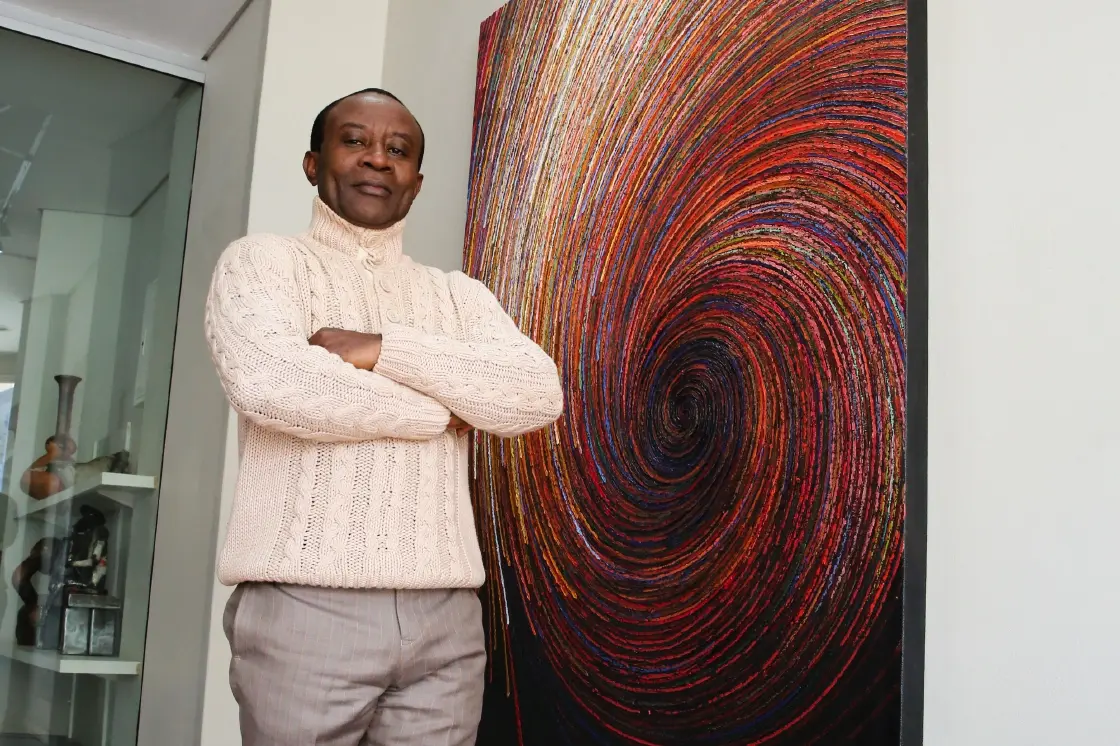
As the first black-established and owned gallery in Eastern Cape history, under the visionary leadership of charge d'affaires Usen Obot, Galerie Noko immediately changed the cultural topography.
In its previous chapter, the gallery achieved milestones that many thought impossible outside metropolitan art capitals such as Johannesburg and Cape Town:
⦁ National and global stages: It became the first and only Eastern Cape art gallery to take local artists to premier international and national art fairs, including the FNB Joburg Art Fair, Turbine Art Fair, and the prestigious Investec Cape Town Art Fair. Notably, within just 18 months of operation, Galerie Noko was selected alongside heavyweights the Goodman Gallery, Everard Read, and First Floor Gallery to present a solo booth in the coveted "Tomorrow/Today" section at the 2016 Investec Cape Town Art Fair.
⦁ Bringing masters home: Gallery Noko operated as a vital conduit, introducing inmernationally recognised, award-winning luminaries such as Mary Sibande, Florine Démosthène, Mbongeni Buthelezi, Thonton Kabeya, Benon Lutaya, Esther Mahlangu and Neo Matloga — to Gqeberha audiences. It also brought the ABSA L’Atelier Winners exhibition to the Eastern Cape for the first time.
⦁ Nurturing intellectual ecosystems: Through partnerships with Rhodes and Nelson Mandela universities, the Absa Museum and Gallery, Vansa and Business Arts SA, the gallery fostered community development, launched the pioneering New Now Next Emerging Artists Competition, mentored more than 17 young South Africans, and hosted robust intellectual panels featuring academic powerhouses such as Prof Ruth Simbao, Dr Michael Barry, Molemo Moiloa and Mary Duker.
At its core, rejuvenation is the active process of restoring vitality, reframing foundational narrative structures and charting generative directions forward.
Rather than being a mere passive dynamic of preservation, rejuvenation demands an intentional, critical engagement with history, socio-political realities, and contemporary culture.
It dismantles linear, static interpretations of history and lived experience, allowing forgotten, suppressed or overlooked histories to emerge while giving new meaning to old truths.
This process operates as an ontological reset that draws sustenance from foundational origins while undergoing a structural rebirth that responds directly to current contexts.
Furthermore, rejuvenation functions as an insightful critique that interrogates contemporary culture and socio-political systems to reclaim agency, transform institutional spaces and breathe life into stagnant paradigms.

In its new life in Walmer, Galerie Noko adopts this philosophy as the main title and overarching theme of its inaugural exhibition, titled Rejuvenation, offering refreshing, fearless takes on history and socio-political friction, while transforming memory into a vibrant store of value.
To mark this rebirth, Rejuvenation brings together an extraordinary ensemble of artists — each bringing at least 16 years of rigorous professional practice, national acclaim, international exhibition records, and even Venice Biennale representation.
The roster reads as a roll call of contemporary mastery: Diane Victor, Mary Sibande, Colbert Mashile, Sharlene Khan, Phumlani Nthuli, Dolla Sapeta, Usen Obot, Johan Bloom, Duncan Stewart, Nick Hauser, Gail Behrmann, Nomabaso Bedeshe, Patrick Seruwu, Mkhonto Gwazela, Sophie Peters, Werhner Lemmer (abstract outdoor sculptures) and Raquel Adriaan.
As traditionalists who refuse to live by conventions, Galerie Noko's guiding philosophy remains distinct: never present what is merely fashionable or popular, but instead bring the extraordinary and the uncommon into homes, corporate headquarters and public spaces.
Beyond exhibition halls, the gallery has expanded its footprint to offer specialised fine art consultancy and advisory services, providing discerning collectors with trusted guidance for acquiring artworks of verified provenance and lasting value.
When the doors open on October 29, Gqeberha will witness more than an art gallery relaunch — it will witness the reaffirmation of art as an emotional anchor, intellectual compass and enduring store of value.
Usen Obot, Gallery Noko founder