

SummaryOpen the quick read
- Fuchsias, celebrated as the ‘ballerinas’ of shade gardens, produce distinctive, pendulous blossoms in vibrant single and double colour combinations from spring into late autumn.
- These nectar-rich blooms serve as a vital food source for diverse garden pollinators, including bees, butterflies, moths, and hummingbirds.
- They thrive best in cool, dappled light and rich, well-draining acidic soil alongside companion plants such as azaleas, begonias, and ferns.
- Trailing and upright varieties can be planted in garden beds, large containers, or hanging baskets with regular, diluted liquid feeding.
- Pruning and tip-pinching encourage bushier growth and abundant blooms, while propagation is straightforward using softwood or semi-ripe stem cuttings.
JULIA SMITH
Did you ever, as a child, imagine you’d seen a fairy in the garden?
We did. While sitting at a tea table in the heart of a friend’s flower-full garden, her sister, Trish, said she’d spotted a fairy. I don’t know what made us believe it to be true, but perhaps being surrounded by the garden’s floral bounty had us convinced we’d seen a fairy too.
Thinking back, the most likely fairy-like flower was probably a fuchsia.
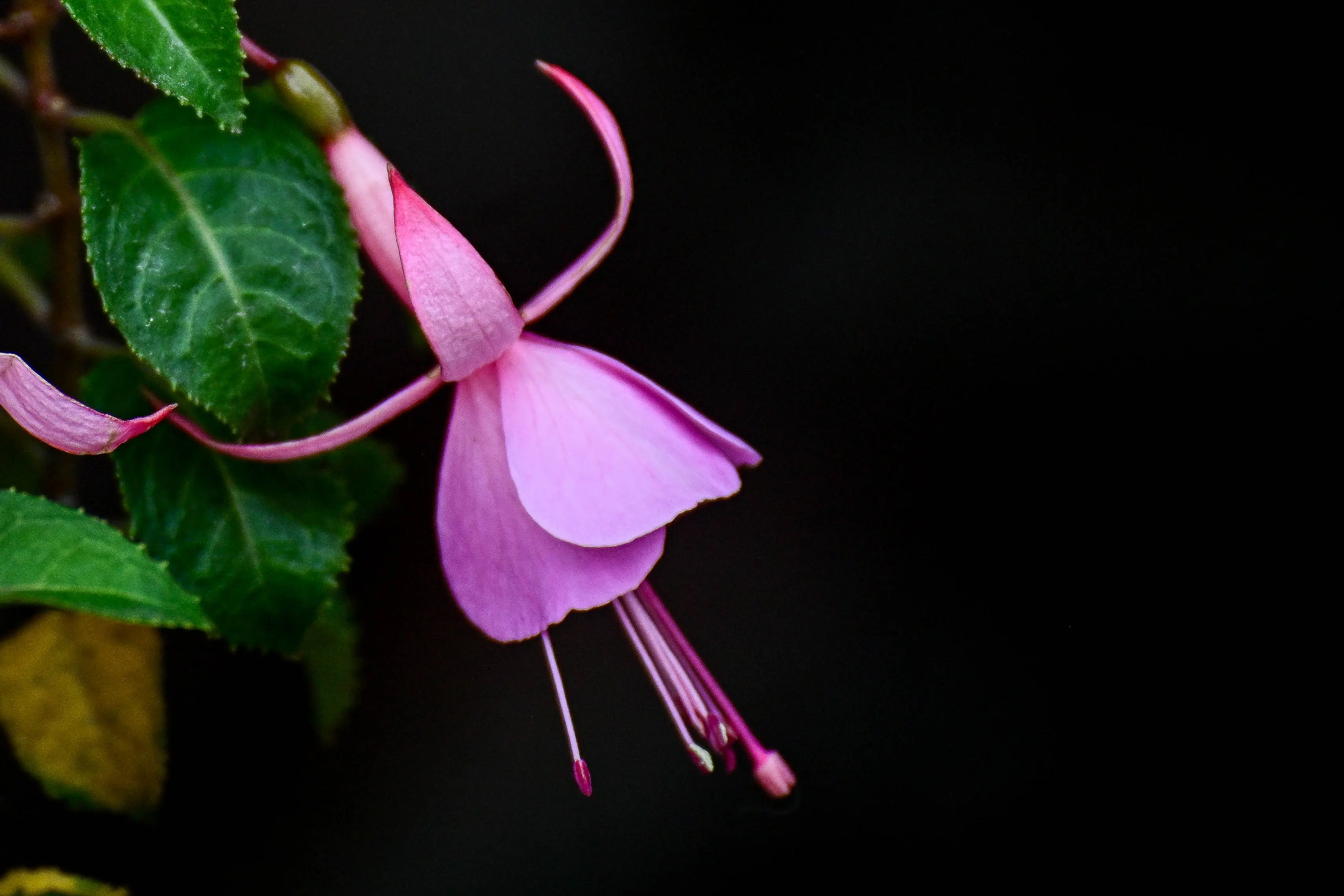
Being pendulous, the pretty skirted flowers do appear to dance hence its common name "ballerina flower". Or the "bell plant" as it starts flowering from a bell, opening in this shape from where another "skirt" develops.
Fuchsias originated from the mountainous areas of South and Central America and New Zealand. From about 110 species, horticulturists have developed over 800 to several thousand hybrids and cultivars.
They are perfect for adding a bit of fairytale magic to a cool, airy, dappled shade area of your garden.
Fuchsias are the most free-flowering shade-loving plants.
They range from 5mm singles to 6cm doubles in every imaginable flower colour with combinations of white, lavender blue, coral, salmon orange, crimson, and scarlet which appear from spring to late autumn.
They are a favourite of pollinators as the flowers are nectar and pollen rich.
- Humming birds find their long beaks can easily reach deep into their tubular blossoms for nectar.
- Single-flowered fuchsias are a favourite of bumblebees and honeybees for collecting nectar and pollen.
- Butterflies and moths are also drawn to fuchsias, as are hummingbird hawkmoths.
- As the fuchsias bloom from summer well into autumn, they provide a vital late-season food source when other flowers fade.
The flowers are followed by small dark reddish green, deep red or purple edible berries which contain seeds.
Their foliage varies from lush green to bronze. Some have variegated leaves. Fuchsias are evergreen in temperate regions and deciduous in frosty areas.
The best time to plant fuchsias is now, in early spring or next year from mid to late autumn. They will reward you continuously with flowers from now until well into April.
There is an enormous array of cultivars - those with a vigorous upright habit which develop into bushy shrubs to a metre tall. These may be grown into standards.
Some have a trailing habit making them ideal for planting in pots, hanging baskets or placed in spots where they can spill over retaining walls, rocks or adding delight in pots placed at the edges of a flight of stairs.
Planting the fuchsia in a tall pot will help to show off their trailing pendulous form.
They make good companions to a wide variety of plants which enjoy like conditions. These are azaleas, camelias, hydrangeas, begonias and ferns have similar growing needs. That is, dappled shade in fairly acidic soil.
One idea is to plant them with azaleas. When the azaleas have finished flowering the fuchsias will take over, flowering to ensure that that section of the garden remains colourful.
Position. Fuchsias need a cool, half-shaded, dappled light position and a slightly humid atmosphere with good air circulation. (But not windy). This will prevent red spider mite or white fly infestation on the plant.
In too much shade the plant tends to become leggy.
Planting
They need rich, moist, slightly acidic soil that is well-draining. Ask your nursery for a small bag of acidic compost to add to the mix. Prepare the planting hole.
Dig the area before planting to a spade’s depth. Add compost, the small bag of acidic compost, and a general fertiliser such as Atlantic Bio Organic All Purpose fertiliser to the area. Turn the soil again.
Dig a hole, fill it with water. Once it has drained away, add a handful of bonemeal to the hole. Plant the fuchsia making sure the top of the root ball is flush with the surface of the soil.
Apply mulch around the plant (a little away from the main stem) to maintain the moisture level and keep weeds at bay.
Feed the plant with a balanced liquid fertiliser during its growing season. Regular weekly feeding with the liquid fertiliser at half strength is more beneficial than a full strength feed less often.
Hanging baskets
Use a good potting soil, with acid compost. Add vermiculite to the mix to make the soil lighter. Keep the soil moist. Remove spent blooms, dead and damaged leaves to keep the plant healthy. Water with a liquid fertiliser. Water hanging baskets and pots regularly and every other day in summer. Keep the soil moist, but not waterlogged.
Pruning
Remember that flowers form on new growth of the current season.
In autumn in our region, where we have mild winters, prune the fuchsia plant by one-third. (In regions with heavy frost it is preferable to do this pruning in spring).
You may encourage a new plant to become bushier by pinching off the growth tips of the branches. Do this after three sets of leaves have formed on a branch. Using your thumb and forefinger, pinch off the top two tiny leaves forcing them to branch. Repeat until the plant develops a bushy shape and a short, stout trunk is formed.
Established plants can also be trimmed this way, lightly in early spring when they are ready to sprout again.
Keep the plant healthy by removing any dead leaves, seed pods, diseased, damaged or weak growth and dead flowers. This encourages further blooming too.
Propagation
You can grow fuchsias from softwood cuttings taken throughout summer. Semi-ripe cuttings can be taken from February to March. They are best taken from the tip of a shoot that has at least three to four pairs of leaves.
Method
Remove the bottom pair of leaves. Trim off the base of the cutting with a clean sharp knife just below the leaf joint where you have just removed the leaves.
Fill an eight centimetre pot with an equal part of river sand and peat or perlite.
Make a hole in the rooting medium with a pencil to the length of the cutting that will ensure that it is kept stable and upright. The last/bottom pair of leaves should be just above the surface of the soil. Water the pot. Tie a plastic bag over the pot, allowing space for the cutting to stand upright with a bit of space above it. Place it in the shade. Keep it moist.
The cutting could take 12 to 20 days to root. You can tell if it has rooted when there is resistance when you tug at it which means the roots have formed.
Pests
If given the right growing conditions problems with pests will be relatively few. They can be susceptible to fungal and viral infections.
Trim off and dispose of diseased plant parts. Keep the area around the plants free of dead foliage and other debris. Often the best course of action is preventative.
Keep the soil drainage effective, prune the plant to improve air circulation and keep the leaves as dry as possible. It’s possibly easier to start over with a new disease-free plant rather than to resurrect an ailing one.