

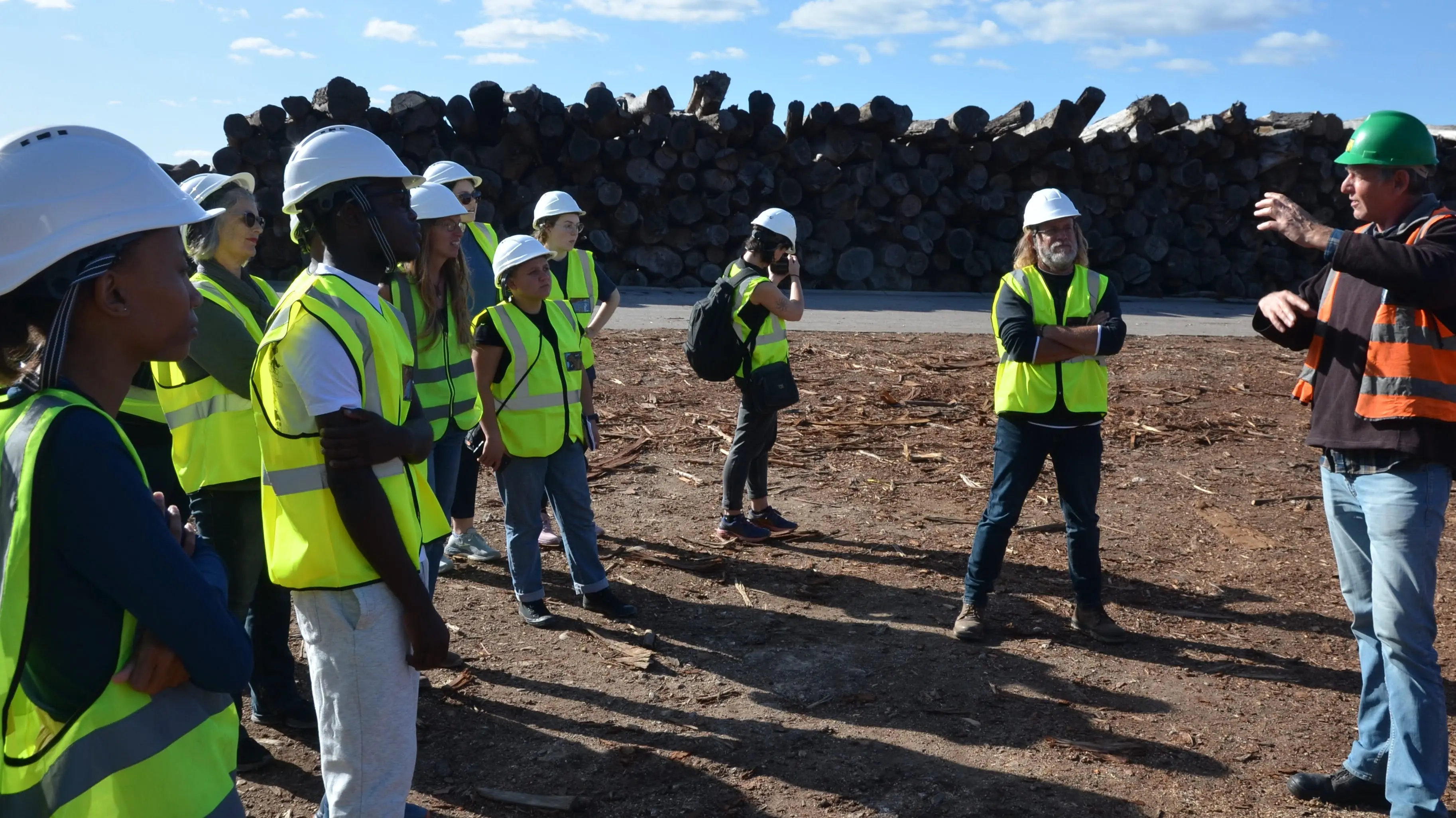
Nelson Mandela University's visionary initiative, Horizon 2055, has received the prestigious Vice-Chancellor's Engagement Excellence Award. Led by Prof Andrea Hurst and the SARChI Chair in Identities and Social Cohesion in Africa, the project engaged 40 participants across disciplines to rethink urban sustainability, ecology, and social unity.
What will Nelson Mandela Bay look like in 2055? And what can we do today to shape a more sustainable future for the city?
These questions were at the heart of Horizon 2055, a research and public engagement project led by Nelson Mandela University's SA Research Chairs Initiative (SARChI) Chair in Identities and Social Cohesion in Africa (ISCIA), which recently received the Vice-Chancellor's Engagement Excellence Award.
Led by research chair Prof Andrea Hurst, Horizon 2055 brought together 40 participants from diverse academic disciplines and backgrounds to explore the relationship between environmental sustainability, social cohesion and the future of society.
Rather than confining these conversations to lecture halls, the project took participants into the metropolitan area to encounter the people, organisations and environments shaping the city's social and ecological landscape.
Through 21 seminars, three immersive "City (E)scapes" journeys across 13 sites in Nelson Mandela Bay and a culminating exhibition programme, participants engaged with places ranging from Fishwater Flats Wastewater Treatment Works and the Zwartkops estuary to the Motherwell canal, Coega Development Corporation and Van Stadens Flower Reserve.
The journeys challenged conventional approaches to teaching and knowledge production, creating opportunities to learn from experts in their own environments through conversations, site visits and shared experiences.
For Hurst, this shared experience was among the project's most significant outcomes.
"Somewhere along the way, people who might otherwise never have met became collaborators and friends," she said, reflecting on how participants transformed their encounters into artworks, films, poetry, music, dance and philosophical conversations.
Kgomotso Ramushu, professional officer for SARChI Strategic Investments, Innovation and Impact, represented the National Research Foundation (NRF), which funds SARChI research chairs, at the celebration.
She said the project demonstrated what it meant for research to respond meaningfully to societal challenges.
"Horizon 2055 is what that mandate looks like when it leaves the page and walks into the city," she said.
Ramushu highlighted the project's reciprocal approach to engagement, noting that community organisations were not simply treated as research sites, but participated in exhibitions and knowledge creation.
She also pointed to relationships and initiatives that have continued beyond the project's formal activities, including engagement through the Motherwell Hub, Friends of Van Stadens and LoveLife.
The ISCIA Chair is based in the university's faculty of humanities, reflecting its grounding in philosophy and the arts.
Its achievement also highlights the faculty's contribution to the university's strategic priority of revitalising the humanities and advancing scholarship in service of the public good.
Acting dean Dr Jacqui Lück said Horizon 2055 demonstrated how humanities scholarship could engage with urgent societal questions while creating opportunities for different forms of knowledge to meet.
The project builds on the earlier Tributaries initiative, which brought art and philosophy into conversation and received an Engagement Excellence Award in 2020.
Horizon 2055 extended this approach, with its influence continuing through postgraduate research, further exhibitions, community partnerships and scholarly collaborations, including ongoing work on urban sustainability.
Deputy vice-chancellor for research, internationalisation and innovation Prof Azwinndini Muronga congratulated the chair and participants, reaffirming the university's commitment to supporting research chairs and ensuring their intellectual contributions have a lasting influence beyond individual funded projects.
Though the award was presented to Hurst as chairholder, she emphasised that it belonged to all 40 participants, whose contributions had shaped something no individual could have created alone.
Follow The Herald WhatsApp channel today and stay connected to the stories shaping our world.
The Herald